More About This Card
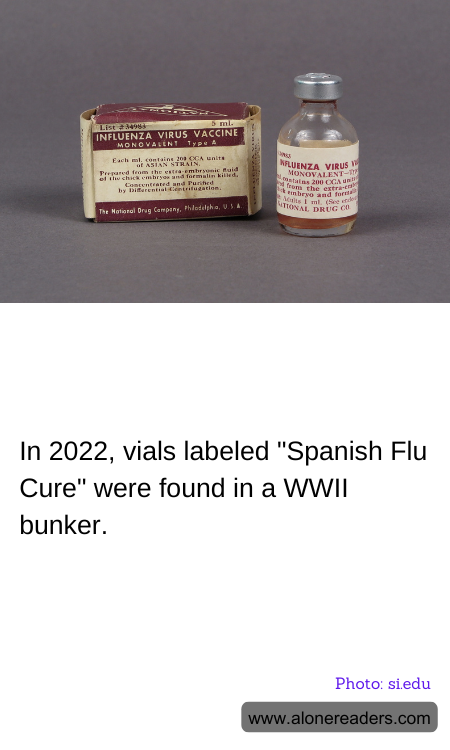
In an unexpected discovery that has captured the attention of historians and scientists alike, vials labeled "Spanish Flu Cure" were unearthed in a World War II bunker in 2022. This intriguing find has sparked curiosity and speculation about the potential contents of these vials and their historical significance. The Spanish Flu, which swept across the globe in 1918, was one of the deadliest pandemics in history, claiming millions of lives. The notion that a cure might have been developed and stored away during such a tumultuous period is both fascinating and mysterious.
The vials were discovered by a team of archaeologists conducting a routine exploration of a long-abandoned bunker in Europe. The bunker, believed to have been used by military personnel during the Second World War, was largely untouched, preserving a snapshot of the era. Among the various artifacts and relics, the vials stood out due to their unusual labeling and pristine condition. The labels, written in faded ink, clearly read "Spanish Flu Cure," sparking immediate interest and a flurry of questions.
Experts have been quick to caution against jumping to conclusions about the contents of the vials. While the labels suggest a connection to the Spanish Flu, it is important to remember that medical knowledge and practices were vastly different a century ago. The term "cure" might have been used loosely, referring to a treatment or remedy rather than a definitive solution to the virus. Scientists are now tasked with analyzing the vials' contents to determine their composition and potential historical context.
The discovery has also reignited discussions about the Spanish Flu pandemic and its impact on global health policies. The 1918 pandemic was a pivotal moment in medical history, highlighting the need for better public health infrastructure and international cooperation in combating infectious diseases. The vials serve as a tangible reminder of the challenges faced by previous generations and the ongoing quest to understand and mitigate the effects of pandemics.
As researchers delve into the analysis of the vials, there is hope that they might provide new insights into early 20th-century medical practices and the global response to the Spanish Flu. Whether the vials contain a genuine attempt at a cure or merely a placebo, their discovery is a testament to the enduring human desire to overcome illness and protect communities. The story of these vials, nestled away in a forgotten bunker, is a poignant reminder of the resilience and ingenuity that have shaped our approach to public health over the decades.