More About This Card
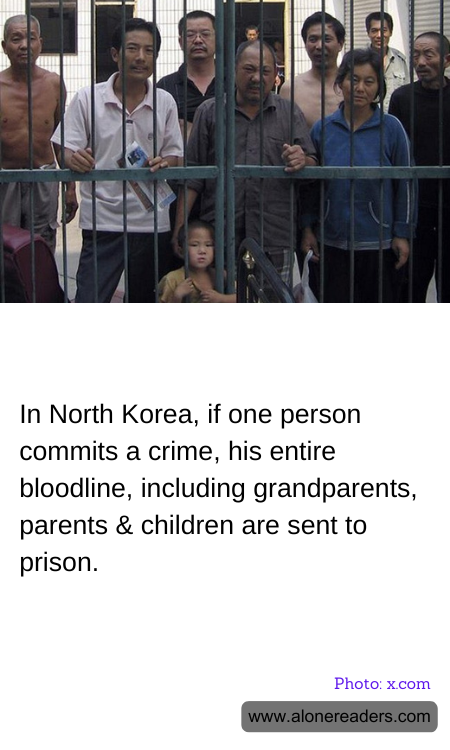
In North Korea, the concept of justice extends far beyond the individual, enveloping entire families in a system that punishes not just the perpetrator but their entire bloodline. This practice, known as "guilt by association" or "yeon-jwa-je," is a chilling reminder of the authoritarian grip the regime holds over its citizens. It is a policy that underscores the extent to which the state will go to maintain control and instill fear among its people.
The roots of this practice can be traced back to the early days of the North Korean regime, where loyalty to the state and its leaders was paramount. The government, under the leadership of the Kim dynasty, has long employed this tactic to suppress dissent and ensure that any potential threat to its power is swiftly and comprehensively neutralized. By punishing entire families for the actions of one member, the regime effectively deters individuals from engaging in activities that could be perceived as subversive or rebellious.
This policy has profound implications for the social fabric of North Korean society. Families live under the constant threat of collective punishment, knowing that the actions of one member could lead to the incarceration of grandparents, parents, and children alike. This creates an environment of pervasive fear and mistrust, where individuals are often compelled to police not only their own behavior but also that of their relatives. The psychological toll of such a system is immense, as families are torn apart and lives are irrevocably altered by the actions of a single individual.
The conditions in North Korean prisons are notoriously harsh, with reports of forced labor, inadequate food, and brutal treatment of inmates. For those imprisoned under the "guilt by association" policy, the experience is particularly harrowing, as they are often detained without trial and held indefinitely. The lack of transparency and due process means that many families have little hope of release, and the stigma associated with imprisonment can linger for generations.
International human rights organizations have long condemned North Korea's practice of collective punishment, calling it a violation of basic human rights principles. Despite this, the regime remains largely impervious to external criticism, maintaining its draconian policies in the face of widespread condemnation. The international community continues to grapple with how best to address these human rights abuses, with diplomatic efforts often hampered by the regime's isolationist stance and reluctance to engage with the outside world.
In conclusion, the practice of punishing entire families for the crimes of one individual is a stark illustration of the lengths to which the North Korean regime will go to maintain its hold on power. It serves as a powerful deterrent against dissent, ensuring that the population remains compliant and subservient. As the world continues to shine a light on these human rights violations, the hope remains that one day, the people of North Korea will be free from the shadow of collective punishment and able to live without fear of retribution for the actions of others.