More About This Card
In recent years, the rise of electric vehicles (EVs) has marked a significant shift in the automotive industry, promising a future of cleaner and more sustainable transportation. However, this transition has introduced new challenges, particularly concerning pedestrian safety. Unlike traditional internal combustion engine vehicles, electric cars operate almost silently, especially at low speeds. This quietness, while beneficial in reducing noise pollution, poses a risk to pedestrians, cyclists, and visually impaired individuals who rely on auditory cues to detect approaching vehicles.
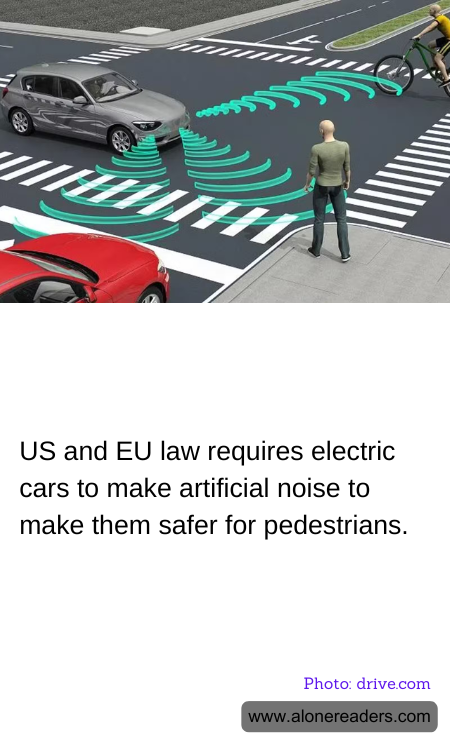
To address this safety concern, both the United States and the European Union have implemented regulations requiring electric vehicles to emit artificial noise. These laws mandate that EVs produce a sound when traveling at low speeds, typically below 20 km/h (about 12 mph) in the EU and 18.6 mph (about 30 km/h) in the US. The artificial noise is designed to alert pedestrians of the vehicle's presence, thereby reducing the risk of accidents.
The implementation of these regulations has been a collaborative effort between governments, automotive manufacturers, and advocacy groups. In the US, the National Highway Traffic Safety Administration (NHTSA) has been at the forefront of establishing guidelines for the minimum sound requirements for hybrid and electric vehicles. Similarly, the European Union has introduced the Acoustic Vehicle Alerting System (AVAS) as part of its broader strategy to enhance road safety.
The artificial sounds generated by electric vehicles are carefully engineered to be noticeable without being intrusive. Automakers have the flexibility to design unique sounds for their vehicles, allowing for brand differentiation while ensuring compliance with safety standards. These sounds are typically a blend of frequencies that can be easily heard by pedestrians, even in noisy urban environments.
While the introduction of artificial noise in electric vehicles has been largely welcomed as a necessary safety measure, it has also sparked discussions about the future of urban soundscapes. Some critics argue that the addition of artificial noise could contribute to noise pollution, counteracting one of the key benefits of electric vehicles. However, proponents emphasize that the sounds are only activated at low speeds and are designed to be as unobtrusive as possible.
As electric vehicles continue to gain popularity, the integration of artificial noise is a crucial step in ensuring that the transition to greener transportation does not compromise pedestrian safety. By balancing the need for safety with the desire for quieter cities, these regulations reflect a thoughtful approach to modernizing transportation infrastructure. As technology advances, it is likely that further innovations will enhance the effectiveness and efficiency of these systems, paving the way for a safer and more harmonious coexistence between vehicles and pedestrians.