More About This Card
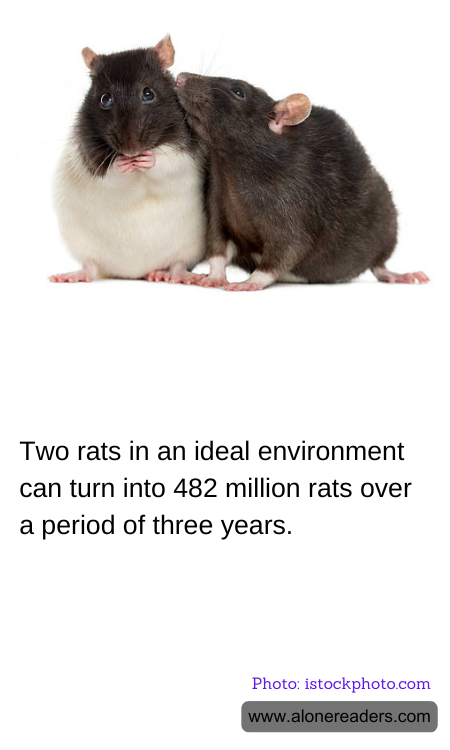
In the fascinating world of biology, the reproductive potential of certain species can be both astonishing and alarming. Among these prolific creatures, rats stand out as a prime example of nature's capacity for rapid population growth. Under ideal conditions, a pair of rats can theoretically multiply into a staggering 482 million descendants over the course of just three years. This remarkable statistic underscores the importance of understanding the dynamics of rat populations and the implications for ecosystems and human environments.
Rats are known for their high reproductive rate, which is a key factor in their potential for exponential population growth. A female rat can become sexually mature as early as five weeks old and can produce a litter of six to twelve pups every three weeks. With a gestation period of just 21 to 23 days, the reproductive cycle of rats is incredibly short. This means that a single pair of rats can produce multiple generations within a single year, each contributing to the burgeoning population.
The theoretical calculation of 482 million rats over three years assumes optimal conditions, including abundant food, shelter, and the absence of predators or disease. In reality, such conditions are rarely sustained, as natural and environmental factors typically limit population growth. Predation, competition for resources, and disease outbreaks serve as natural checks on rat populations, preventing them from reaching their full reproductive potential. However, in environments where these limiting factors are minimized, such as urban areas with plentiful food waste and shelter, rat populations can grow rapidly and become problematic.
The implications of unchecked rat population growth are significant. Rats are known carriers of various diseases, including leptospirosis, hantavirus, and salmonella, posing health risks to humans and animals alike. Additionally, their tendency to gnaw on structures and wiring can lead to property damage and even fires. As such, understanding and managing rat populations is crucial for maintaining public health and safety.
Efforts to control rat populations typically involve a combination of strategies, including sanitation measures to reduce food availability, habitat modification to eliminate nesting sites, and the use of traps and rodenticides. Public awareness and community involvement are also essential components of effective rat management programs. By reducing the factors that contribute to rat population growth, communities can mitigate the risks associated with these prolific rodents.
In conclusion, the potential for two rats to multiply into 482 million over three years serves as a powerful reminder of the reproductive prowess of these creatures. While such exponential growth is unlikely in natural settings, the possibility highlights the importance of proactive measures to manage rat populations and protect human health and infrastructure. Through a combination of scientific understanding and practical interventions, we can coexist with these resilient animals while minimizing their impact on our lives.