More About This Card
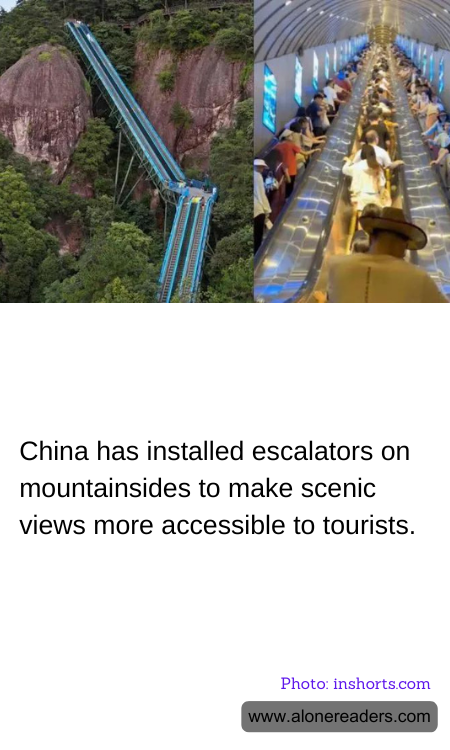
China, a country renowned for its breathtaking landscapes and rich cultural heritage, has embarked on an innovative approach to make its scenic views more accessible to tourists. By installing escalators on mountainsides, China is not only enhancing the tourism experience but also ensuring that its natural beauty can be enjoyed by people of all ages and physical abilities.
The initiative to install escalators on mountainsides is part of a broader effort to promote tourism while preserving the environment. These escalators are strategically placed in some of China's most picturesque locations, allowing visitors to ascend steep terrains with ease. This development is particularly beneficial for elderly tourists, families with young children, and individuals with mobility challenges who might otherwise find it difficult to explore these majestic sites.
One of the most notable examples of this innovation is the escalator at the Tianmen Mountain in Zhangjiajie, Hunan Province. Known for its stunning natural arches and panoramic views, Tianmen Mountain attracts millions of visitors each year. The escalator, which is ingeniously integrated into the mountainside, provides a seamless and comfortable journey to the top, offering tourists the opportunity to enjoy the scenery without the physical strain of a long hike.
While the installation of escalators has been met with enthusiasm by many, it has also sparked discussions about the balance between accessibility and environmental conservation. Critics argue that such developments could potentially disrupt the natural habitat and detract from the authenticity of the experience. However, proponents emphasize that these projects are designed with sustainability in mind, using eco-friendly materials and construction methods to minimize environmental impact.
Moreover, the escalators are part of a larger trend in China to improve infrastructure in tourist areas. This includes the construction of cable cars, glass walkways, and other facilities that enhance the visitor experience while promoting safety and convenience. By investing in such infrastructure, China aims to boost its tourism industry, which is a significant contributor to the national economy.
The introduction of mountainside escalators reflects China's commitment to making its natural wonders accessible to a broader audience. It underscores the importance of inclusivity in tourism, ensuring that everyone, regardless of age or physical ability, can experience the awe-inspiring beauty of China's landscapes. As more tourists flock to these sites, the challenge will be to maintain the delicate balance between accessibility and preservation, ensuring that future generations can also enjoy these magnificent views.
In conclusion, China's installation of escalators on mountainsides is a testament to the country's innovative approach to tourism. By prioritizing accessibility and sustainability, China is setting a precedent for other nations to follow, demonstrating that it is possible to enhance the tourism experience while respecting and preserving the natural environment. As these projects continue to evolve, they promise to open up new possibilities for exploring the world's most stunning landscapes.