More About This Card
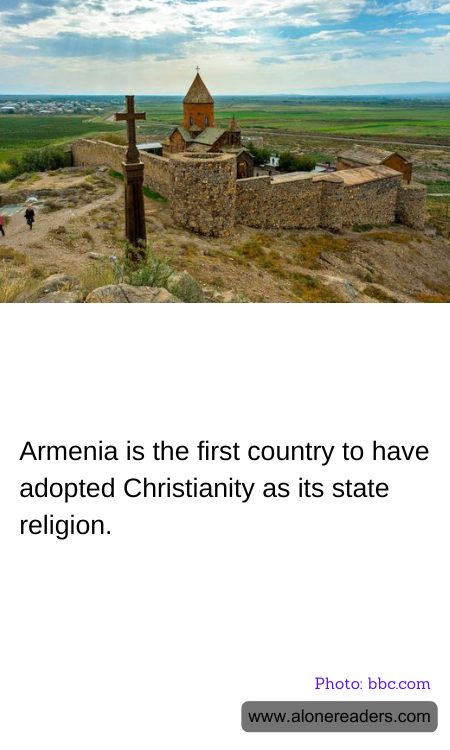
Armenia holds a unique place in history as the first country to adopt Christianity as its state religion, a milestone that occurred in the early 4th century. This significant event is attributed to the conversion of King Tiridates III, who declared Christianity the official religion of Armenia around 301 AD. The adoption of Christianity not only shaped the spiritual landscape of Armenia but also had profound cultural and political implications that resonate to this day.
The story of Armenia's conversion is closely linked to the figure of St. Gregory the Illuminator, who played a pivotal role in the Christianization of the Armenian people. According to tradition, Gregory endured years of imprisonment for his faith before he was called upon to heal King Tiridates III, who was suffering from a mysterious illness. After his miraculous recovery, the king embraced Christianity and proclaimed it the state religion, marking the beginning of a new era for Armenia.
This early adoption of Christianity set Armenia apart from its neighboring regions, which were predominantly pagan or adhered to other religious traditions. The establishment of Christianity as the state religion helped to unify the Armenian people under a common faith, fostering a sense of national identity that has endured through centuries of external pressures and invasions. The Armenian Apostolic Church, one of the oldest Christian institutions in the world, became a cornerstone of Armenian culture and identity, influencing art, literature, and architecture.
The conversion to Christianity also had significant political ramifications. It aligned Armenia more closely with the Roman Empire, which was gradually moving towards Christianity, and distanced it from the Zoroastrian Sassanian Empire to the east. This shift in alliances played a crucial role in the geopolitical dynamics of the region, as Armenia found itself at the crossroads of competing empires.
Throughout history, Armenia's Christian heritage has been a source of resilience and pride for its people. Despite facing numerous challenges, including invasions, occupations, and the tragic events of the Armenian Genocide in the early 20th century, the Armenian Church has remained a vital institution, preserving the nation's spiritual and cultural legacy.
Today, Armenia's rich Christian heritage is celebrated through its many ancient churches and monasteries, which dot the landscape and attract visitors from around the world. These historic sites, some of which are UNESCO World Heritage Sites, serve as a testament to Armenia's enduring faith and its pivotal role in the history of Christianity.
In conclusion, Armenia's adoption of Christianity as its state religion was a transformative event that has left an indelible mark on the nation's history and identity. As the first Christian nation, Armenia continues to cherish its religious heritage, which remains a source of strength and unity for its people.