More About This Card
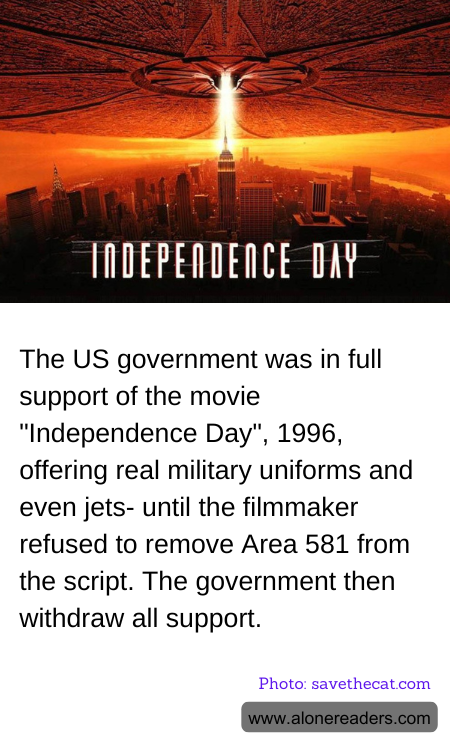
In the mid-1990s, Hollywood was abuzz with the production of "Independence Day," a film that promised to deliver an epic tale of alien invasion and human resilience. Directed by Roland Emmerich, the movie was set to feature spectacular scenes of destruction and heroism, with the United States military playing a pivotal role in the defense against extraterrestrial forces. Initially, the U.S. government was enthusiastic about the project, offering substantial support in the form of real military uniforms and even access to jets, which would lend authenticity to the film's portrayal of military operations.
However, this collaboration took an unexpected turn when the filmmakers refused to comply with a specific request from the government. The script of "Independence Day" included a reference to Area 51, the highly secretive military base in Nevada that has long been the subject of conspiracy theories and speculation regarding extraterrestrial research. The U.S. government, concerned about the potential implications of featuring Area 51 in a major motion picture, requested that the filmmakers remove any mention of the base from the script.
Roland Emmerich and his team, however, were adamant about keeping Area 51 as a key element of the storyline. They believed that the inclusion of the mysterious base added an intriguing layer to the narrative, tapping into the public's fascination with UFOs and government secrecy. The filmmakers' refusal to alter the script led to a significant fallout with the government, which subsequently withdrew all support for the film. This decision meant that the production team had to find alternative means to achieve the desired level of realism in the military scenes.
Despite the lack of official support, "Independence Day" went on to become a massive box office success, grossing over $800 million worldwide. The film's depiction of Area 51, complete with secretive labs and hidden alien technology, captured the imagination of audiences and contributed to the enduring mystique surrounding the base. The government's withdrawal of support, rather than hindering the film, arguably added to its allure, as it fueled public curiosity about what might be hidden within the real Area 51.
The story of "Independence Day" and its clash with the U.S. government serves as a fascinating example of the tension between artistic vision and governmental interests. It highlights the delicate balance filmmakers must navigate when dealing with sensitive subjects, especially those that touch on national security and public intrigue. Ultimately, the film's success demonstrated that sometimes, embracing the unknown and controversial can lead to a cultural phenomenon that resonates with audiences around the world.