More About This Card
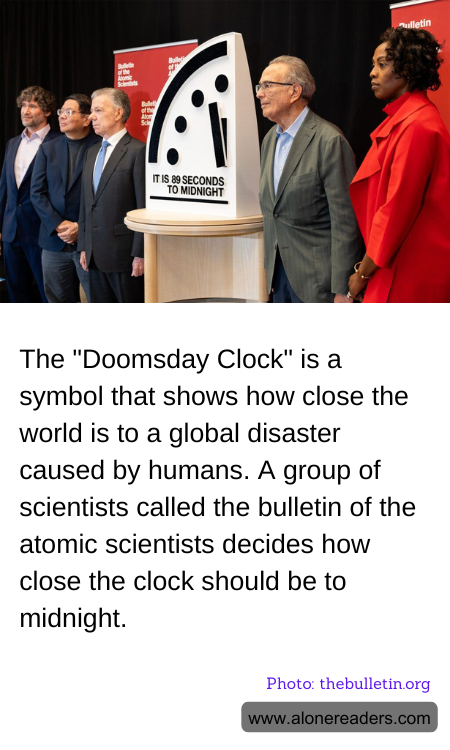
The "Doomsday Clock" is a powerful symbol that encapsulates the world's proximity to a global catastrophe, primarily driven by human actions. Created in 1947 by the Bulletin of the Atomic Scientists, this symbolic clock is not a measure of time in the traditional sense but rather an indicator of how close humanity is to self-destruction. The closer the clock's hands are to midnight, the closer we are to potential disaster.
The Bulletin of the Atomic Scientists, a group of esteemed scientists and experts in fields such as nuclear technology, climate science, and cybersecurity, is responsible for setting the clock. They consider a range of factors, including nuclear threats, climate change, and emerging technologies, to determine the clock's position. Their goal is to raise awareness and prompt action to reduce the risks that threaten our planet's future.
Over the years, the Doomsday Clock has become a barometer of global security and environmental stability. Initially, it focused on the threat of nuclear war, reflecting the tensions of the Cold War era. However, as the world has evolved, so too has the scope of the clock. Today, it also accounts for the dangers posed by climate change, cyber warfare, and biotechnological advancements. Each year, the Bulletin reviews the state of the world and decides whether to move the clock closer to or further from midnight.
The clock's current setting is a sobering reminder of the precarious state of our world. In recent years, it has been set closer to midnight than ever before, reflecting the growing concerns over nuclear proliferation, the accelerating impacts of climate change, and the increasing complexity of global political tensions. The clock serves as a call to action, urging world leaders and citizens alike to take meaningful steps to mitigate these threats.
While the Doomsday Clock is a symbol of potential doom, it also embodies hope. It reminds us that the future is not predetermined and that human actions can steer the course of history. By addressing the root causes of these existential threats, such as reducing carbon emissions, securing nuclear materials, and fostering international cooperation, we can move the clock's hands further from midnight.
In essence, the Doomsday Clock is more than just a symbol; it is a call to consciousness. It challenges us to reflect on the impact of our actions and to work collectively towards a safer, more sustainable world. As we face the challenges of the 21st century, the clock serves as a poignant reminder that the power to change the future lies in our hands.