More About This Card
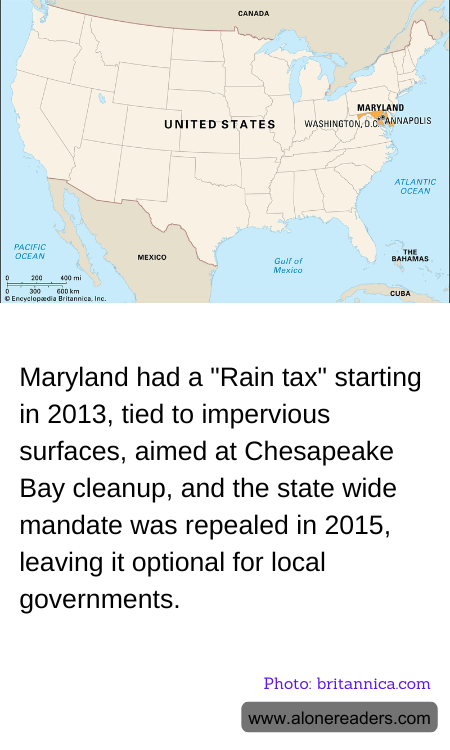
In 2013, Maryland introduced a controversial environmental initiative commonly referred to as the "Rain Tax." This policy was officially known as the Stormwater Remediation Fee, and it was designed to address the pressing issue of pollution in the Chesapeake Bay, one of the most significant and ecologically diverse estuaries in the United States. The tax was tied to impervious surfaces, such as driveways, rooftops, and parking lots, which prevent rainwater from naturally soaking into the ground. Instead, this water runs off into storm drains, carrying pollutants into the bay and contributing to its degradation.
The rationale behind the Rain Tax was to generate funds for stormwater management projects aimed at reducing runoff pollution. By taxing properties based on the amount of impervious surface they contained, the state sought to create a financial incentive for property owners to implement environmentally friendly practices, such as installing rain gardens or permeable pavements. The funds collected were intended to support local governments in their efforts to upgrade stormwater infrastructure, ultimately improving the health of the Chesapeake Bay.
However, the implementation of the Rain Tax was met with significant opposition. Critics argued that it placed an unfair financial burden on property owners, particularly those with large impervious surfaces who faced higher fees. Some saw it as an overreach of government authority, while others questioned the effectiveness of the tax in achieving its environmental goals. The controversy surrounding the tax led to heated debates among policymakers, environmentalists, and the public.
In 2015, just two years after its introduction, the statewide mandate for the Rain Tax was repealed. The decision to repeal was largely influenced by the backlash from constituents and the political climate at the time. However, the repeal did not eliminate the possibility of local governments continuing to impose the fee. Instead, it left the decision up to individual counties and municipalities, allowing them to determine whether to maintain, modify, or eliminate the tax based on their specific needs and circumstances.
Since the repeal, some local governments in Maryland have chosen to continue implementing the fee, recognizing the importance of funding stormwater management projects to protect the Chesapeake Bay. Others have opted for alternative methods to address stormwater runoff and pollution. The debate over the Rain Tax highlights the ongoing challenge of balancing environmental protection with economic considerations and the complexities involved in crafting policies that effectively address environmental issues while gaining public support.
The story of Maryland's Rain Tax serves as a reminder of the intricate relationship between human activities and the environment. It underscores the need for innovative solutions and collaborative efforts to tackle environmental challenges, ensuring that future generations can enjoy the natural beauty and resources of places like the Chesapeake Bay. As local governments continue to navigate these challenges, the lessons learned from the Rain Tax experience will undoubtedly inform future policy decisions aimed at achieving sustainable environmental outcomes.