More About This Card
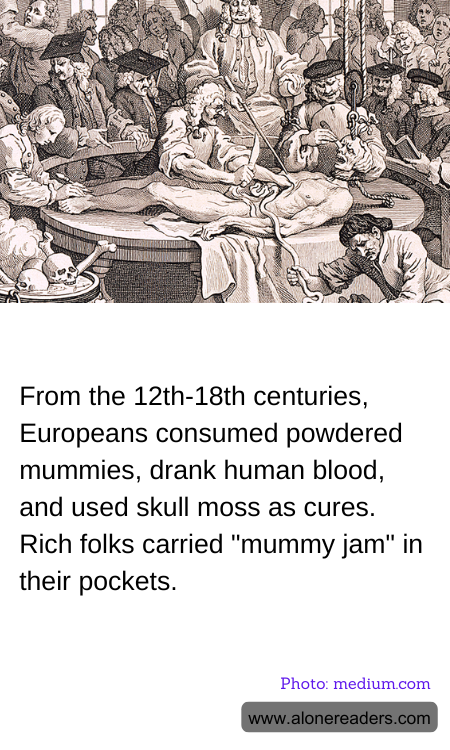
In the annals of medical history, few practices are as peculiar and macabre as the consumption of human remains for medicinal purposes. From the 12th to the 18th centuries, Europeans engaged in a practice known as "corpse medicine," where they consumed powdered mummies, drank human blood, and used skull moss as cures for various ailments. This bizarre chapter in history reflects the lengths to which people would go in their quest for health and longevity.
The use of mummies in medicine began during the Middle Ages when the remains of ancient Egyptian mummies were ground into a fine powder and ingested as a remedy for a wide range of ailments. This practice was rooted in the belief that the preserved bodies of the ancient Egyptians contained potent healing properties. Known as "mumia," this substance was thought to cure everything from headaches to stomach ulcers. The demand for mummy powder was so high that it led to the looting of Egyptian tombs and the creation of counterfeit mummies made from the bodies of executed criminals and the poor.
In addition to mummy powder, Europeans also turned to human blood as a remedy. This practice was particularly popular during the Renaissance and was based on the belief that fresh blood contained vital life force. The blood of young men, in particular, was thought to be especially potent. It was common for people to attend executions to collect the blood of the condemned, which was then consumed as a tonic. This practice was not limited to the lower classes; even the elite believed in the rejuvenating properties of human blood.
Another unusual remedy was the use of moss that grew on human skulls, known as "usnea." This moss was believed to have healing properties and was used to treat nosebleeds and epilepsy. It was often harvested from the skulls of criminals who had been executed and left to decompose on gibbets. The moss was then dried and ground into a powder for medicinal use.
The wealthy, in particular, indulged in these macabre remedies. They carried "mummy jam," a concoction made from powdered mummy mixed with other ingredients, in their pockets as a portable cure-all. This practice was not only a testament to their wealth but also to their belief in the mystical properties of ancient remains.
While these practices may seem shocking today, they were a reflection of the medical understanding of the time. The lack of scientific knowledge and the desperation for effective treatments led people to explore all possible avenues for healing. It wasn't until the advent of modern medicine and a better understanding of human anatomy and disease that these practices fell out of favor.
Today, the idea of consuming human remains for medicinal purposes is viewed with horror and disbelief. However, this chapter in history serves as a reminder of the lengths to which humans have gone in their pursuit of health and the ever-evolving nature of medical science.