More About This Card
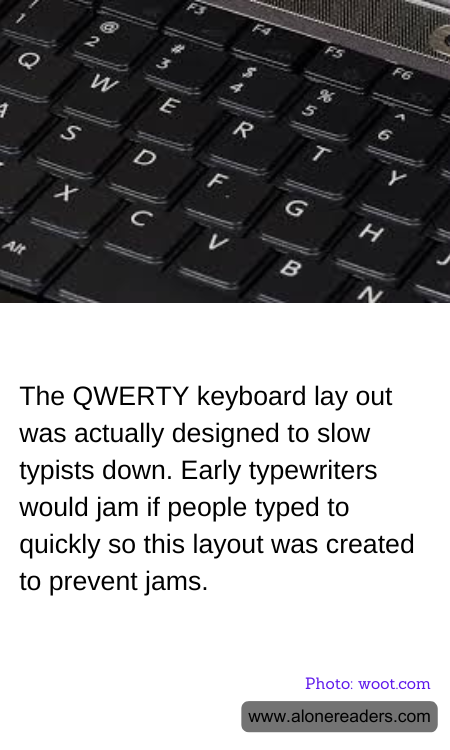
The QWERTY keyboard layout, a ubiquitous feature of modern computing, has an intriguing origin story that dates back to the late 19th century. Contrary to what one might assume, the QWERTY arrangement was not designed for speed or efficiency. Instead, it was developed to address a mechanical limitation of early typewriters: the tendency for keys to jam when struck in rapid succession.
The invention of the typewriter revolutionized the way people communicated, offering a faster alternative to handwriting. However, the initial designs of typewriters had a significant flaw. When typists pressed keys too quickly, the metal arms, or typebars, that held the letters would collide and jam, disrupting the typing process. This mechanical issue posed a significant challenge for inventors and manufacturers who sought to make typewriters more reliable and user-friendly.
Enter Christopher Latham Sholes, an American inventor who played a pivotal role in the development of the typewriter. In the 1870s, Sholes, along with his colleagues, devised the QWERTY layout as a solution to the jamming problem. By strategically placing commonly used letter pairs further apart, the QWERTY arrangement reduced the likelihood of typebars clashing. This design effectively slowed down typists just enough to prevent jams, allowing for smoother operation of the machine.
Despite its original purpose, the QWERTY layout has endured for over a century, becoming the standard keyboard configuration worldwide. Its persistence can be attributed to several factors, including the widespread adoption of the layout in early typewriters and the subsequent training of generations of typists. Once a standard is established, it becomes challenging to introduce alternatives, even if they promise greater efficiency.
Interestingly, alternative keyboard layouts, such as the Dvorak Simplified Keyboard, have been developed to increase typing speed and reduce finger movement. However, these alternatives have struggled to gain traction due to the deep-rooted familiarity and institutional inertia surrounding QWERTY. The layout's dominance is a testament to the power of historical precedent and the challenges of changing established norms.
Today, as we navigate the digital age, the QWERTY keyboard remains a familiar companion, a relic of a bygone era of mechanical innovation. While modern technology has eliminated the mechanical constraints that necessitated its creation, the QWERTY layout endures as a symbol of adaptability and the unforeseen ways in which technology shapes human behavior. As we continue to innovate and evolve, the story of the QWERTY keyboard serves as a reminder of the intricate dance between human ingenuity and the machines we create.