More About This Card
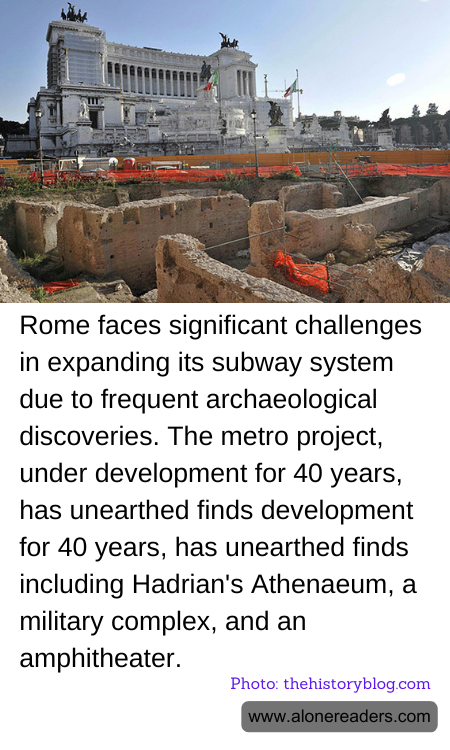
Rome, the Eternal City, is a living museum where history and modernity coexist in a delicate balance. This unique characteristic, while enchanting, poses significant challenges for urban development, particularly in expanding its subway system. For over 40 years, the city has been attempting to extend its metro network, a project fraught with delays and complications due to the frequent discovery of archaeological treasures beneath its streets.
The ambitious metro project, aimed at alleviating traffic congestion and improving public transportation, has become a journey through time. Each excavation for the new subway lines often leads to remarkable archaeological finds, turning construction sites into archaeological digs. Among the most notable discoveries are Hadrian's Athenaeum, a military complex, and an ancient amphitheater. These finds not only provide invaluable insights into Rome's storied past but also necessitate careful preservation efforts, further complicating the construction process.
The discovery of Hadrian's Athenaeum, an ancient school of philosophy and rhetoric, was a significant archaeological breakthrough. This site, believed to have been established by Emperor Hadrian in the 2nd century AD, offers a glimpse into the intellectual life of ancient Rome. Similarly, the unearthing of a military complex sheds light on the city's strategic importance and its role in the Roman Empire's defense mechanisms. These sites, once buried and forgotten, now demand attention and resources to ensure their preservation for future generations.
While these archaeological finds are celebrated by historians and archaeologists, they present a formidable challenge for city planners and engineers. The need to preserve Rome's rich heritage often leads to prolonged construction timelines and increased costs. Each discovery requires a halt in construction, followed by meticulous documentation and preservation efforts, before any further development can proceed. This delicate dance between progress and preservation is a testament to Rome's commitment to honoring its past while striving for a more efficient future.
Despite these challenges, the expansion of Rome's subway system remains a priority for the city. The metro is crucial for reducing traffic congestion, lowering pollution levels, and providing residents and tourists with a reliable mode of transportation. As the city continues to grow, the demand for an efficient public transport system becomes increasingly urgent. Balancing this need with the preservation of its archaeological heritage is a complex task that requires innovative solutions and international collaboration.
In conclusion, Rome's efforts to expand its subway system highlight the city's unique position as a custodian of history and a modern metropolis. The frequent archaeological discoveries, while complicating development, enrich our understanding of ancient Rome and underscore the importance of preserving its legacy. As the city navigates these challenges, it serves as a reminder of the delicate interplay between past and present, and the enduring value of cultural heritage in shaping our future.