More About This Card
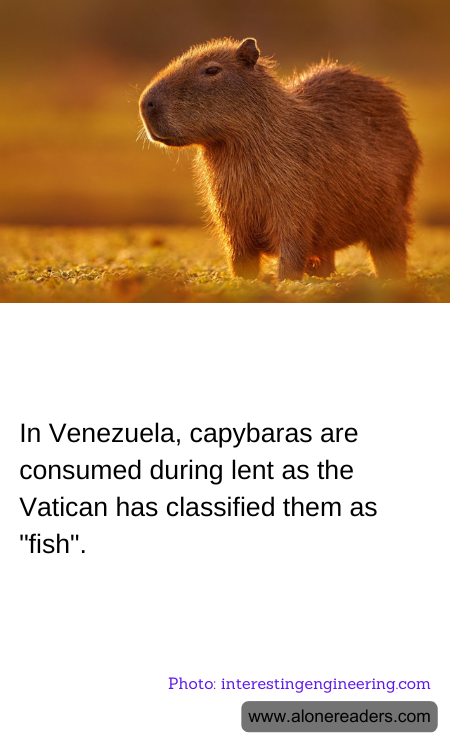
In the heart of South America, Venezuela offers a unique culinary tradition that intertwines with its cultural and religious practices, particularly during the Lenten season. This tradition involves the consumption of capybaras, the world's largest rodent, which has been classified as "fish" by the Vatican, allowing it to be consumed during Lent—a period when Catholics traditionally abstain from eating meat.
The capybara, known locally as "chigüire," is a semi-aquatic mammal native to the wetlands of Venezuela. Its classification as a fish dates back to the 16th century when Spanish missionaries, faced with the challenge of converting indigenous populations, sought a papal decree to allow the consumption of capybara during Lent. The Vatican, understanding the necessity of integrating local customs into religious practices, granted this unusual classification. This decision was based on the capybara's aquatic lifestyle, which somewhat parallels that of fish, thus making it an acceptable Lenten dish.
During Lent, Venezuelan families prepare capybara in various traditional dishes, often marinating it with spices and cooking it in stews or roasting it. The meat is known for its tender texture and unique flavor, which has become a cherished part of the country's culinary heritage. This practice not only reflects the adaptability of religious customs but also highlights the rich biodiversity of Venezuela and the importance of local traditions in shaping cultural identity.
The consumption of capybara during Lent is more than just a dietary choice; it is a reflection of the harmonious blend of faith, tradition, and ecology. It underscores the adaptability of religious practices to local environments and the importance of preserving cultural heritage. For many Venezuelans, eating capybara is a way to honor their ancestors and maintain a connection to their roots, while also observing the religious significance of Lent.
This tradition has sparked curiosity and interest among visitors and culinary enthusiasts worldwide, who are often intrigued by the idea of a rodent being classified as fish. It serves as a reminder of the diverse ways in which cultures adapt religious practices to fit their unique contexts, and how these adaptations can lead to fascinating culinary traditions.
In a world where globalization often leads to the homogenization of cultures, Venezuela's Lenten tradition of consuming capybara stands out as a testament to the enduring power of local customs. It is a celebration of cultural diversity and a reminder of the creative ways in which communities can integrate their beliefs with their natural surroundings. As such, the capybara continues to play a significant role in Venezuelan culture, symbolizing the intersection of faith, tradition, and the natural world.