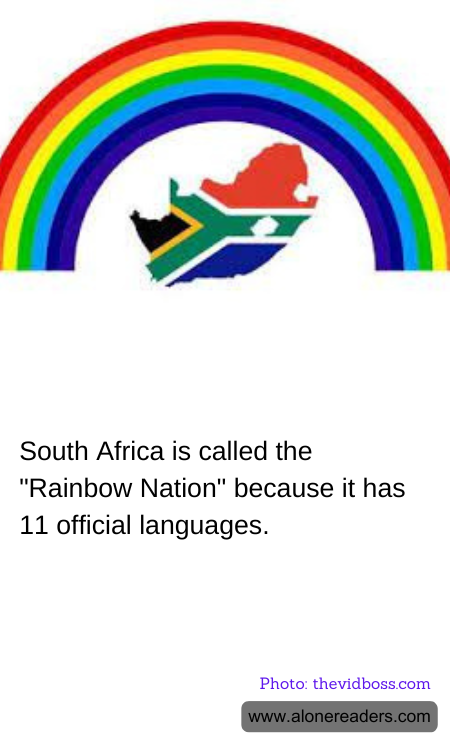
South Africa, often referred to as the "Rainbow Nation," is a country celebrated for its rich diversity and cultural tapestry. This nickname, coined by Archbishop Desmond Tutu and later popularized by Nelson Mandela, reflects the country's unique blend of ethnicities, cultures, and languages. One of the most striking aspects of this diversity is the presence of 11 official languages, a testament to the nation's commitment to embracing its multicultural identity.
The 11 official languages of South Africa are Afrikaans, English, isiNdebele, isiXhosa, isiZulu, Sesotho, Setswana, siSwati, Tshivenda, Xitsonga, and Sepedi. Each language represents a distinct cultural group, contributing to the vibrant mosaic that defines the nation. This linguistic diversity is not just a matter of communication; it is a reflection of the country's history, struggles, and triumphs. The recognition of these languages is a significant step towards honoring the heritage of all South Africans and ensuring that every cultural group has a voice in the national discourse.
The decision to recognize multiple languages officially was made in the post-apartheid era, a time when South Africa was redefining itself as a nation committed to equality and inclusivity. The apartheid regime had long suppressed many of these languages, favoring Afrikaans and English. The new democratic government sought to rectify this by promoting linguistic diversity as a cornerstone of national unity. This move was not only symbolic but also practical, as it aimed to foster mutual respect and understanding among the country's various communities.
In everyday life, the multilingual nature of South Africa is evident in its education system, media, and public services. Schools often offer instruction in several languages, allowing children to learn in their mother tongue while also acquiring proficiency in others. Television and radio broadcasts are available in multiple languages, ensuring that information and entertainment are accessible to all. Government documents and services are also provided in various languages, reflecting the inclusive ethos of the nation.
The celebration of linguistic diversity extends beyond official recognition. South Africa's cultural festivals, literature, music, and art all draw inspiration from the country's myriad languages and traditions. This cultural richness is a source of pride for many South Africans, who see it as a strength that unites rather than divides them. The "Rainbow Nation" is not just a metaphor; it is a lived reality where different colors, cultures, and languages coexist harmoniously.
In conclusion, South Africa's designation as the "Rainbow Nation" is deeply intertwined with its recognition of 11 official languages. This linguistic diversity is a powerful symbol of the country's commitment to inclusivity and equality. It serves as a reminder of the nation's journey from a divided past to a hopeful future, where every voice is heard, and every culture is celebrated. As South Africa continues to evolve, its embrace of diversity remains a beacon of hope and inspiration for the world.
