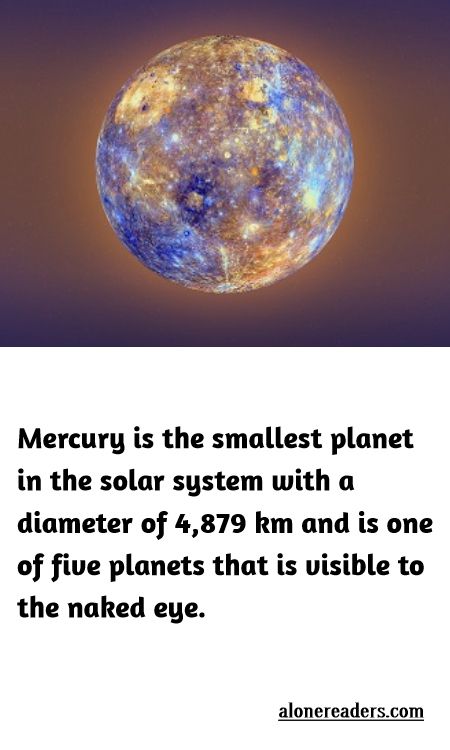
Mercury, often overlooked in favor of its more majestic planetary neighbors, is a fascinating world in its own right. Known as the smallest planet in our solar system, Mercury measures just 4,879 kilometers in diameter, significantly less than Earth. Despite this diminutive size, Mercury presents a realm full of extremes and mysteries that challenge our understanding of planetary science.
Notably, Mercury is one of only five planets that can be seen from Earth without the aid of a telescope, making it an object of curiosity and observation for centuries. It appears in the Earth's sky either at dawn or at dusk, and its proximity to the Sun limits its visibility to these times. This unique positioning also leads to some of Mercury's most extreme characteristics, particularly its temperature variations. The planet's surface experiences drastic fluctuations, ranging from 800 degrees Fahrenheit (427 degrees Celsius) during the day to -290 degrees Fahrenheit (-179 degrees Celsius) at night. This is due to the absence of a substantial atmosphere to retain heat.
The planet's orbit is another point of interest as it is the most elliptical of the solar system's planets. This oval-shaped path brings Mercury as close as 29 million miles (47 million kilometers) and as far as 43 million miles (70 million kilometers) from the Sun. Additionally, Mercury rotates very slowly on its axis and completes one rotation every 59 Earth days. Its orbital period around the Sun takes only 88 Earth days, resulting in a day on Mercury (sunrise to sunrise) being twice as long as its year. This peculiar relationship between Mercury’s rotational and orbital periods causes the Sun to appear to move in a unique way in its sky.
Another enticing aspect of Mercury is its highly tenuous atmosphere, which consists mostly of oxygen, sodium, hydrogen, helium, and potassium. This atmosphere is so thin that scientists refer to it as an exosphere because it almost doesn't behave like a true atmosphere. This can't protect the planet from meteoroids and solar radiation, leading to a surface that is both heavily cratered and rich with mysterious folds, called "lobate scarps," which suggest past geological activity.
Exploration of Mercury has been limited but impactful. Missions like NASA's MESSENGER, which orbited the planet from 2011 to 2015, have provided invaluable data about Mercury’s composition, geological history, and magnetic field. The BepiColombo mission, a joint project of the European Space Agency and the Japan Aerospace Exploration Agency, is currently en route to enter orbit around Mercury in 2025.
Despite being shadowed by the grandiosity of other planets, Mercury remains an intriguing subject of study that continues to captivate scientists and astronomers alike, unraveling the mysteries of the smallest planet in our solar system. Its proximity and visibility to the naked eye ensure that it has a special place in both scientific research and in the hearts of stargazing enthusiasts around the globe.
