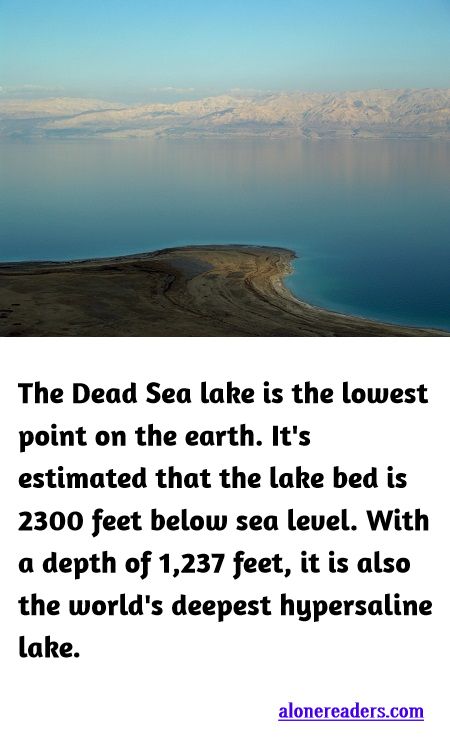
The Dead Sea, situated between Jordan to the east and Israel and Palestine to the west, is a salt lake renowned not only for being the lowest point on Earth but also for its unusually high salt content. At 2,300 feet below sea level, the surface and shores of the Dead Sea mark the earth’s lowest elevation on land. This phenomenon creates a unique environment where few organisms can flourish, hence the name.
With a maximum depth of approximately 1,237 feet, the Dead Sea is the deepest hypersaline lake in the world. The lake’s saline levels can reach up to ten times saltier than the ocean, which is unusual for such large bodies of water. This high salt concentration prevents most life from thriving in it; however, it supports the growth of certain salt-tolerant organisms known as halophiles and creates a buoyant swimming experience for visitors, who find it easy to float due to the high density of the water.
The high mineral content in the Dead Sea is reputed for its therapeutic qualities, drawing visitors from around the world who seek to rejuvenate their skin and relieve ailments such as arthritis and back pain. The mud from the Dead Sea is particularly sought after for its benefits in skincare, often used in cosmetic and therapeutic products worldwide.
Furthermore, the Dead Sea region holds important historical and cultural significance. It has been a place of refuge and spiritual solace since ancient times, providing sanctuary to King David, it was one of the world’s first health resorts (for Herod the Great), and it is also the site where the Dead Sea Scrolls were discovered. These scrolls contain some of the oldest known manuscripts of the Hebrew Bible, making the area immensely important to both archaeological and religious scholars.
Despite its popularity and significance, the future of the Dead Sea is in jeopardy due to shrinking water levels, primarily driven by water diversion from its main tributary, the Jordan River, and mineral extraction industries. This environmental strain poses challenges for the surrounding ecosystems and future tourism. Conservation efforts are more crucial than ever to safeguard this unique geological and cultural landmark.
