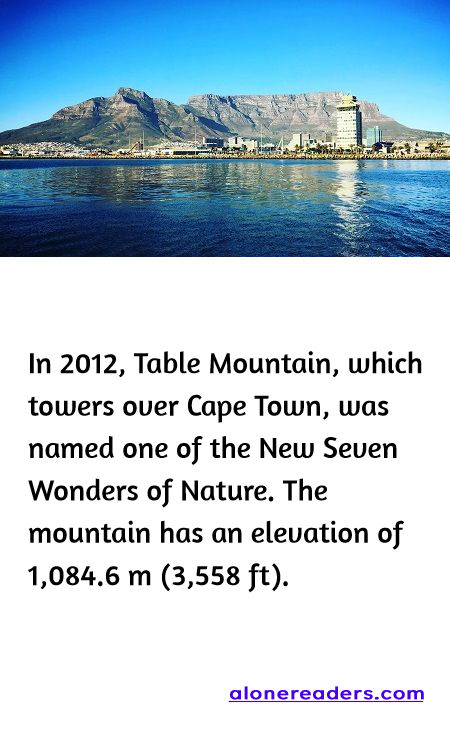
Table Mountain, the iconic landmark that dramatically overlooks Cape Town, South Africa, was designated as one of the New Seven Wonders of Nature in 2012. This majestic mountain rises to an elevation of 1,084.6 meters (3,558 feet) above sea level, offering breathtaking panoramic views that attract millions of tourists each year. Known for its distinguished flat-top, the mountain forms a significant part of Table Mountain National Park and serves as a critical conservation area, hosting an exceptional range of biodiversity including the unique fynbos vegetation, which is part of the Cape Floral Kingdom, recognized as a global biodiversity hotspot.
The allure of Table Mountain extends beyond its floral diversity. It is famed for its rich history and cultural significance. Historically, it served as a beacon for sailors navigating around the southern tip of Africa and has various myths and legends attributed by local indigenous groups. Today, the mountain is accessible via a cable car system that was upgraded in 1997 to hold up to 65 people per car, and rotates to give all passengers a 360-degree aerial view as they ascend and descend. For the more adventurous, numerous hiking trails are available, ranging from simple walks to more challenging climbs, leading to the famous tabletop summit where one can find awe-inspiring vistas of Cape Town, the nearby Lion's Head, and the Atlantic seaboard.
The recognition of Table Mountain as one of the New Seven Wonders of Nature has not only boosted tourism but has also heightened awareness and efforts in environmental preservation. The status has inspired a greater global appreciation and respect for this natural site and supports ongoing conservation efforts necessary to maintain its beauty and ecological integrity. Visitors to Table Mountain are encouraged to engage with the environment respectfully, keeping in mind the importance of preserving such a unique natural treasure for future generations. Whether viewed from below or explored on its heights, Table Mountain continues to be a symbol of natural beauty and a source of national pride for South Africans, epitomizing the heart-stirring landscapes that define the region.
