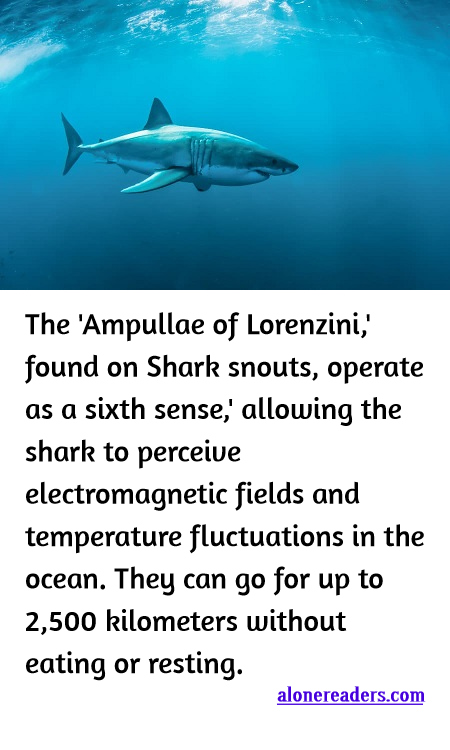
The Ampullae of Lorenzini are remarkable sensory organs found on the snouts of sharks, functioning almost like a sixth sense. These small, jelly-filled pores enable sharks to detect electromagnetic fields and subtle changes in temperature, skills essential for survival in the ocean's murky depths. This capability not only helps them locate prey, such as fish and squid, which emit tiny electrical signals, but also aids in navigating the earth's magnetic field during long migrations.
Electroreception, the ability to perceive electrical impulses, is particularly crucial for sharks as it allows them to identify potential food sources or hazards in the vicinity, even when these are hidden under sand or other opaque materials. The sensitivity of the Ampullae of Lorenzini is so refined that sharks can detect variations in temperature as minute as one degree. This helps them in tracking down thermoclines, which are layers of different temperatures in the ocean, where many prey species are likely to be found.
For animals that often travel thousands of kilometers across oceans, the efficiency of their hunting mechanisms must be precise to sustain their energy needs. Remarkably, some species of sharks can travel as much as 2,500 kilometers without the necessity for eating or resting. This impressive journey underscores not only the effectiveness of their hunting strategies facilitated by the Ampullae of Lorenzini but also their incredible stamina and adaptability to diverse marine environments.
Understanding these unique adaptations provides insights into the evolutionary success of sharks, their role in marine ecosystems, and the intricate balance of oceanic life. Their capacity to detect electromagnetic fields and temperature changes is a testament to the complex sensory skills that have allowed sharks to remain as one of the ocean’s top predators for millions of years.
