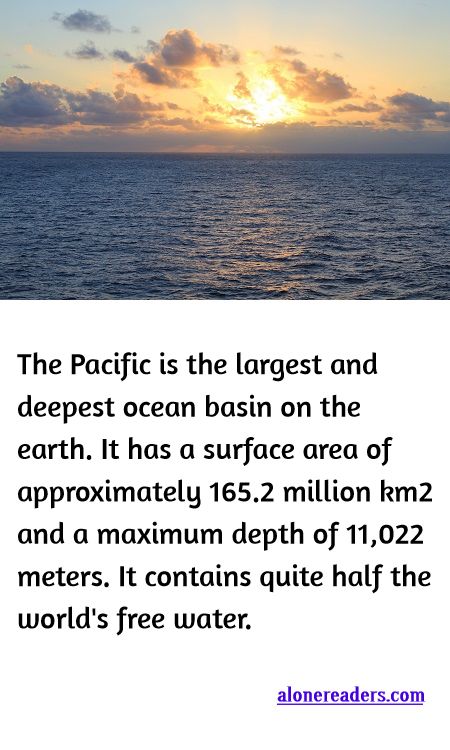
The Pacific Ocean, Earth's largest and deepest oceanic division, holds a unique position in both geographic and environmental terms. Encompassing more than 165 million square kilometers, it stretches from the Arctic in the north to the Southern Ocean in the south, with its waters reaching the shores of continents like Asia and Australia on the west, and the Americas on the east. Not only is it vast in terms of surface area, but it also features the Mariana Trench, the deepest part of the world's oceans, which plunges to approximately 11,022 meters at its deepest point.
The significance of the Pacific Ocean extends beyond just its size. It plays a crucial role in global climate patterns, including phenomena such as El Niño and La Niña, which have far-reaching effects on weather conditions worldwide. Its vast expanse is also a prime driver of the global water cycle, helping to regulate temperatures and climate across the planet.
Moreover, the Pacific is home to an incredible variety of marine biodiversity. It hosts thousands of species of fish, invertebrates, mammals, and other sea life, many of which are unique to its waters. Coral reefs, sprawling across its warmer regions, are not only hotspots of biodiversity but also crucial to the marine ecosystem, offering food, shelter, and breeding grounds for numerous marine species.
However, despite its vastness and importance, the Pacific Ocean faces significant environmental threats, including overfishing, habitat destruction, and pollution, especially from plastic debris. These threats not only affect marine life but also the millions of people who depend on the Pacific Ocean for food, income, and cultural significance.
Conservation efforts are therefore critical in preserving the health and integrity of this oceanic titan. Initiatives to combat illegal fishing, establish marine protected areas, and reduce pollution, especially plastic waste, are vital to ensure that the Pacific Ocean continues to maintain its crucial role in Earth’s geological and ecological framework. The future health of our planet is inextricably linked to the health of the Pacific Ocean, making its conservation a priority for the global community.
