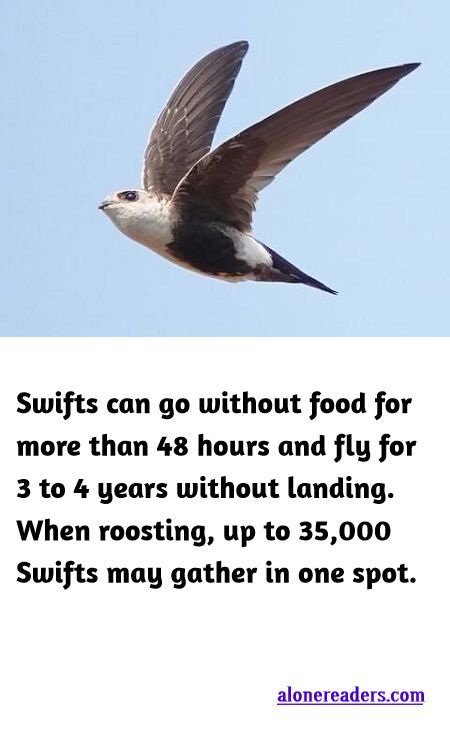
Swifts are among the most aerial of birds, possessing adaptations that allow them astonishing feats of endurance and capability in flight. Indeed, these birds can endure more than 48 hours without food, adapting their metabolism to cope with the scarcity of nourishment during prolonged flights. This ability is particularly crucial during their long migratory journeys which can span thousands of miles across various continents. Moreover, swifts exhibit an incredible ability to remain airborne for extended periods, with some species reportedly capable of flying for three to four years without ever landing. During this time, they perform all their essential activities while in flight, including feeding, mating, and even sleeping.
The physiological and anatomical features of swifts are fine-tuned for life in the air. They have long, scythe-like wings and streamlined bodies that reduce drag and enhance their aerodynamic efficiency. Their metabolic systems are also highly specialized; swifts can conserve energy by lowering their body temperature and entering a torpid state, essentially a form of short-term hibernation while airborne.
When swifts do choose to rest, they do so in large, massive roosts. It is not uncommon for up to 35,000 swifts to gather in a single roosting spot, filling the sky with a spectacular display of aerial agility before settling down for the night. These gatherings not only provide safety in numbers but also help the birds to exchange information about feeding areas, which is crucial for their survival. The places chosen for roosting are typically high altitudes, such as cliff faces or high towers, providing security from terrestrial predators.
The life of swifts, from their extraordinary flight endurance to their communal roosting habits, provides insight into the remarkable adaptations of birds to their environments. Their capacity to remain airborne for such extended periods challenges our understanding of what is possible in the natural world, marking them as exceptional even among their avian peers.
