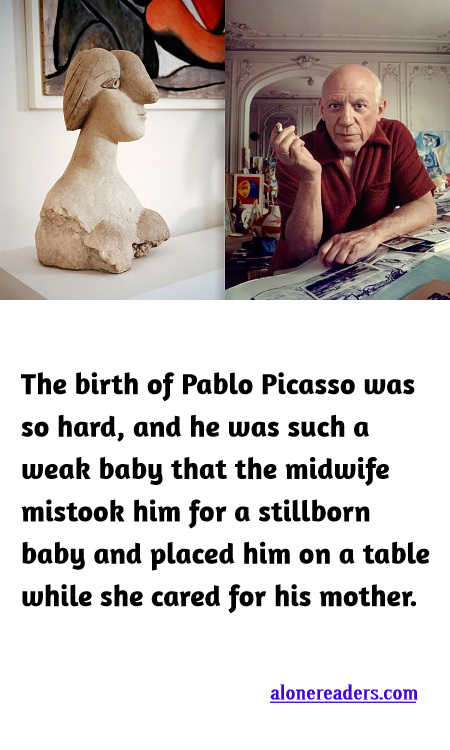
The childhood of Pablo Picasso, one of the most influential artists in the history of Western art, began under dramatically precarious circumstances. Born on October 25, 1881, in Málaga, Spain, Picasso's entry into the world was so fraught with difficulty that he was initially believed to be stillborn. The midwife attending his birth was so convinced that young Pablo showed no signs of life that she left him on a table to attend to his mother, who had endured a grueling labor.
It was Picasso’s uncle, Salvador Ruiz, a doctor, who perceived a faint hint of life in the infant. Recognizing the urgency of the situation, he intervened in a rather unconventional manner. He reportedly blew cigar smoke into the face of the baby, which, perhaps shockingly by modern standards, spurred the newborn Picasso into his first cry. This simple, yet decisive act effectively saved Picasso's life, allowing him to grow into a man who would profoundly change the course of modern art with his innovative approaches and numerous styles, including the creation of Cubism.
Picasso's survival of such an inauspicious beginning marks a poignant prelude to his storied career, characterized by a constant defiance of artistic conventions and an inexhaustible capacity for reinvention. This resilience and tenacity would define not only his infancy but also his artistic journey, witnessing him continuously pushing boundaries and redefining public perceptions of art. Picasso’s work spanned various phases, including the Blue and Rose Periods, the African-influenced Period, Analytic and Synthetic Cubism, all of which showcased his versatility and creativity in exploring different themes and mediums.
Thus, from a near-tragic start to a celebrated end, Picasso's life was a vivid testament to the idea that initial adversities can precede incredible achievements. His robust body of work and his profound impact on art underscore the sheer force of will and the relentless pursuit of creative expression that marked the life of this legendary figure. Picasso not only shaped the artistic landscape of the Twentieth Century but also left behind a lasting legacy that challenges and inspires generations to come.
