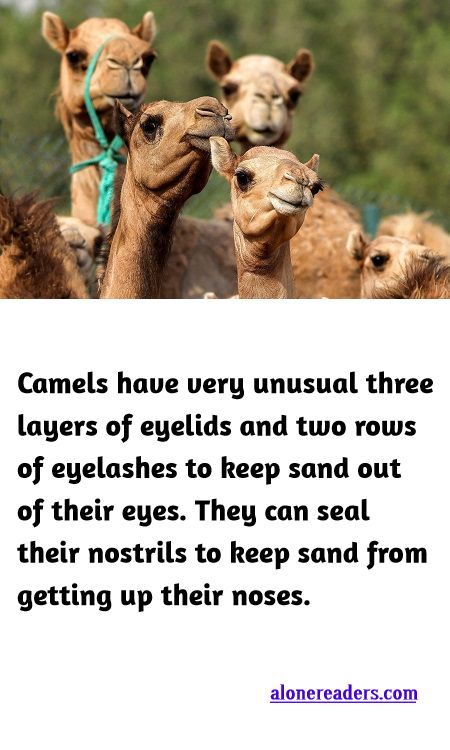
Camels are remarkable creatures superbly adapted to the harsh environments of deserts where they predominantly reside. One of the most intriguing aspects of their adaptation is their unique eye and nasal features that protect them from the omnipresent sand. To start with, camels have three layers of eyelids and two rows of eyelashes. This extraordinary eyelid structure acts as a barrier against sand and dust, notably during sandstorms, which are frequent in desert areas. The outer eyelash layer is long and bushy, capturing sand particles before they can reach the eye. Meanwhile, the inner layers provide additional protection and help to keep the eyes moist, critical in arid conditions.
Beyond their eyes, camels have evolved another fascinating feature: the ability to seal their nostrils. During sandstorms or in particularly dusty conditions, camels can close their nostrils, preventing sand from entering their respiratory system. This ability is vital for their survival, as inhaling sand can lead to respiratory issues and infections, which could be detrimental in a desert environment where finding help would be challenging. This sealing is not permanent and can be controlled by the camel, allowing them to breathe normally when the threat of sand inhalation is not present.
These adaptations highlight the camels' incredible evolutionary journey, making them perfectly suited for life in one of Earth’s most extreme habitats. Their resilience and specialized bodily features not only protect them but also enable them to thrive where few other large mammals can.
