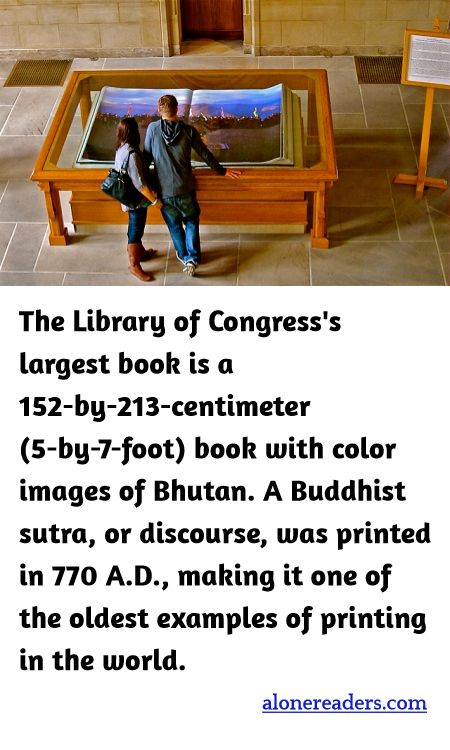
The Library of Congress holds an impressive collection of texts, among which the largest book stands out with its grand dimensions. Measuring 152 by 213 centimeters (5 by 7 feet), this massive volume showcases colorful images of Bhutan, providing an extensive pictorial insight into the rich culture and pristine landscapes of this South Asian kingdom. Beyond the sheer size of the book, the depth and vibrancy of its imagery play a crucial role in capturing and conveying the unique aesthetic and tradition of Bhutanese life.
Additionally, the ancient art of printing is exemplified in the library's collection through a remarkable Buddhist sutra that dates back to 770 A.D. This sutra is recognized as one of the earliest examples of printed material in the world. At a time when most of the written word was painstakingly transcribed by hand, this printed document signifies a groundbreaking advancement in the spread of knowledge and religious text. The age and historical importance of this sutra not only underscore the technological ingenuity of early printing but also illuminate the dissemination of Buddhist teachings across Asia.
Together, these items not only highlight the diverse holdings of the Library of Congress but also offer fascinating insights into both cultural artistry and historical advancements in human communication. The painstaking preservation of these texts allows for ongoing study and appreciation, bridging past eras with the present, and offering invaluable resources for both scholars and the general public. Through these artifacts, the library continues to serve as a guardian of both human history and cultural diversity.
