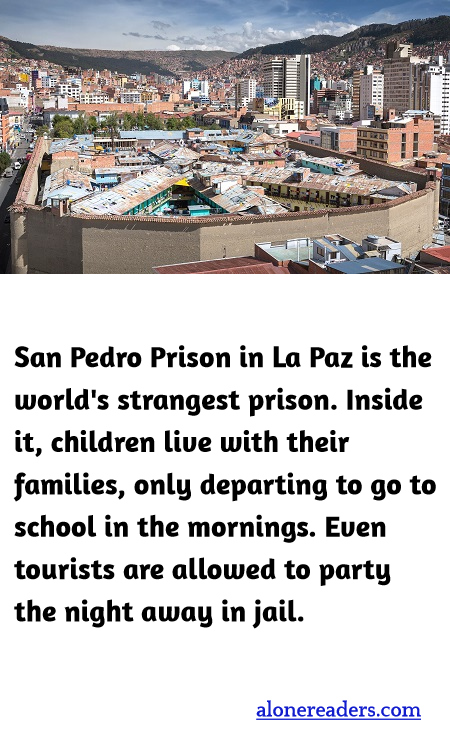
San Pedro Prison in La Paz, Bolivia, is perhaps one of the most unusual correctional facilities in the world, primarily due to its unconventional setup and practices that blur the lines between incarceration and community living. Unlike typical prisons that separate inmates from the outside world, San Pedro allows inmates to live a life that somewhat mimics that of a small society.
One of the most striking aspects of San Pedro is that children and families live inside the prison walls. Inmates, many of whom are serving time for drug-related offenses, are allowed to have their families stay with them. This setup results in children living alongside their incarcerated fathers, entering and leaving the facility daily to attend school. The rationale behind this approach is multifaceted; it aims to maintain family bonds and provide a semblance of normalcy for inmates, which, in theory, aids in their rehabilitation. However, the implications for children growing up in such an environment are complex and fraught with concerns regarding their welfare and development.
In addition to its unusual familial arrangements, San Pedro Prison has gained notoriety for its unique approach to inmate self-governance. The prison operates more like a community than a traditional penal institution. Inmates often have jobs within the prison's economy, which includes internal shops, restaurants, and services run by the prisoners themselves. The prison is divided into sections that range from relatively poor areas to those that resemble middle-class neighborhoods, where inmates can rent rooms or small apartments.
Perhaps the most bizarre facet of San Pedro Prison's existence used to be its openness to tourism. For years, tourists could take guided tours inside the prison, witnessing firsthand its inner workings and unique lifestyle. These tours were often informally conducted by inmates themselves, providing them an opportunity to earn money. Tourists could even partake in overnight stays and festive parties, experiences that were as surreal as they were controversial. However, due to security concerns and growing criticism regarding the ethics of such tours, the Bolivian government officially banned these visits in recent years.
The existence of San Pedro Prison challenges conventional narratives about what a prison is and what it can be. It raises profound questions about dignity, human rights, and the possibilities of reformative justice. While some argue that San Pedro provides a model that helps maintain familial ties and prepare inmates for reintegration into society, others see it as a failing system that exposes families, particularly children, to potential harm and perpetuates an informal economy that can be ripe for exploitation. Regardless of one's stance, San Pedro undeniably provides a unique window into the complexities of penal reform and the human stories within those debates.
