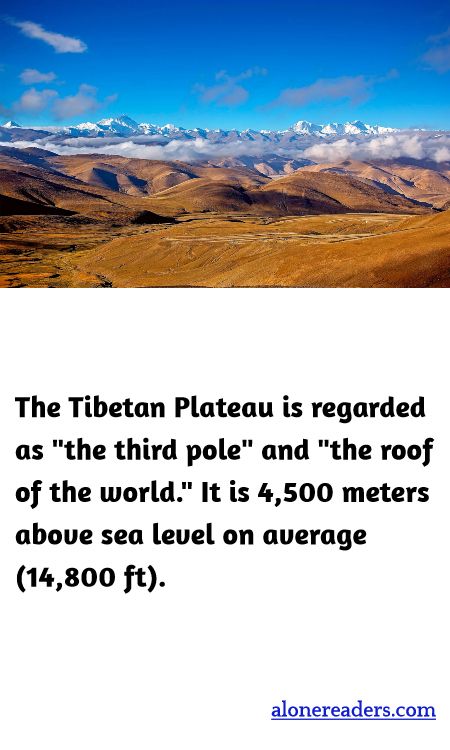
The Tibetan Plateau, often referred to as "the Roof of the World" and "the Third Pole," stands as a monumental natural fortress, dominating the landscape of Central Asia. With an average elevation exceeding 4,500 meters (14,800 feet), it is not only a breathtaking spectacle of vast, barren beauty but also one of the most vital ecological and cultural regions on our planet. The plateau features a stunning array of towering peaks, including parts of the Himalayas, and vast high-altitude plains, offering a unique ecosystem that supports a diversity of wildlife and plants adapted to its harsh, cold conditions.
The significance of the Tibetan Plateau extends beyond its physical grandeur. Scientifically, it is a critical area for climate research. The immense glaciers and ice fields of the plateau act as a water tower for Asia, storing and regulating water for billions of people downstream. Rivers such as the Yangtze, Yellow River, Indus, and Mekong originate here, making the plateau crucial for agriculture, drinking water, and hydroelectricity across multiple countries. However, climate change poses a significant threat to this fragile environment. Rising temperatures have accelerated glacier melt and led to shifts in water availability, impacting agriculture and natural habitats.
Ecologically, this high-altitude region supports unique biodiversity. Rare species such as the snow leopard, the Tibetan antelope, and the wild yak roam its expansive terrains, many of which are integral to the ecological balance and cultural heritage of the area. Despite its sparse population, the Tibetan Plateau is home to numerous ethnic groups, including the Tibetans, who have developed a distinct culture intimately linked with their natural surroundings. This cultural heritage, alongside the natural environment, faces challenges from modernization and the complex political landscape that surrounds Tibetan governance.
Preservation efforts are increasignly critical in the face of these challenges. Initiatives both local and international aim to protect the plateau's natural and cultural landscapes from further degradation. Scientific studies and environmental monitoring continue to play key roles in understanding the changes occurring and in formulating strategies for sustainable management of the region's unique resources.
In conclusion, the Tibetan Plateau, as "the Third Pole" and "the Roof of the World," is much more than an awe-inspiring highland. It is a crucial ecological sanctuary, a reservoir for critical water resources, and a region rich with cultural heritage that requires careful and thoughtful stewardship to preserve its utility and beauty for future generations.
