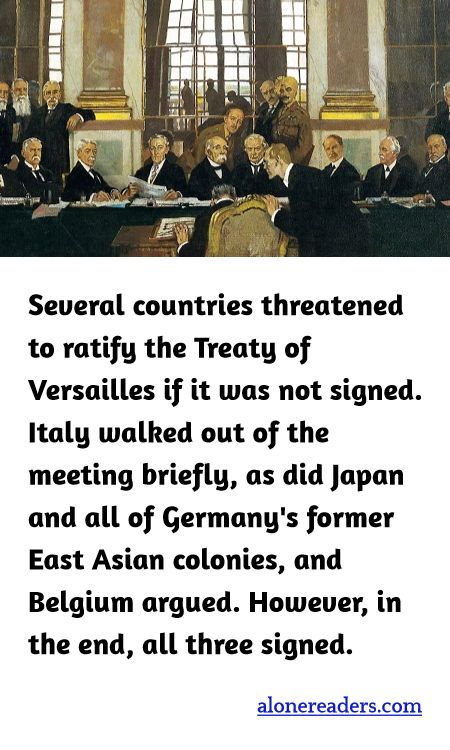
The Treaty of Versailles, concluded in 1919, is famously known for its role in formally ending World War I. This treaty involved negotiations that included an array of nations, each with their own interests and agendas. Several countries at various points during the negotiation process even threatened to ratify the treaty if their demands were not met, an indication of the inherent tension and the complex international relations of the time.
Italy, for instance, temporarily walked out of the negotiations, driven by dissatisfaction with the terms that were proposed, particularly concerning territorial gains it expected after the war. This disruption underscored Italy's struggle to secure its perceived "mutilated victory" as it felt shortchanged of the spoils of war it had anticipated. Japan also withdrew briefly from the discussions, primarily over disagreements regarding racial equality proposals which the Western powers rebuffed. This ignited a feeling of disillusionment in Japan, influencing its future imperialistic endeavors.
Moreover, Belgium, having suffered enormous devastation during the war, argued vehemently for reparations and territorial adjustments. The negotiations for these reparations exposed the intricacies and difficulties of diplomatic agreements when nations are recovering from the wounds of a significant conflict. Countries such as Belgium felt a strong need to secure not just financial compensation but also security guarantees against future German aggression.
Despite these tensions and temporary withdrawals, all three nations—Italy, Japan, and Belgium—ultimately signed the Treaty. This signature was not just a formal adherence to the terms laid out but also a strategic acceptance, often shaped by realpolitik and the complex web of early 20th-century international relations.
The signing of the Treaty of Versailles marked a crucial moment in global politics. It reshaped borders, imposed military restrictions on Germany, and set up the League of Nations aimed at preventing future wars. However, the treaty also planted the seeds for future conflicts by imposing harsh penalties on Germany, contributing to the economic and political instability that led to World War II. The conflicting interests and the occasional retreats from the negotiation table during the treaty discussions were reflective of a broader struggle among war-torn nations to balance national interests with international diplomacy, a dynamic that continues to shape international relations today.
