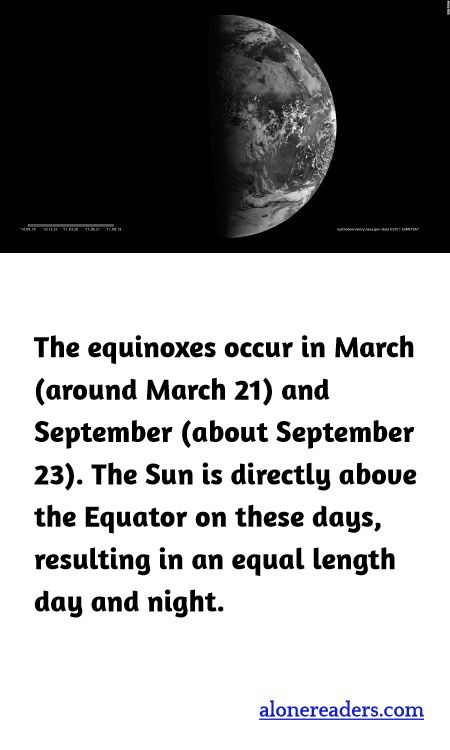
The equinoxes are two pivotal moments in the astronomical calendar, generally occurring on or around March 21 and September 23 each year. These are the days when the Sun is precisely above the Equator, which results in a unique celestial alignment where day and night are approximately equal in length across the globe. This phenomenon occurs due to the tilt of the Earth's axis relative to its orbit around the Sun. Unlike other times of the year, during the equinox, the tilt of Earth's axis is inclined neither away from nor towards the Sun.
In meteorological terms, the equinoxes also signify the change of seasons. The March equinox heralds the arrival of spring in the Northern Hemisphere and autumn in the Southern Hemisphere, signaling a time of rebirth and renewal as well as harvest and preparation for the colder months, respectively. Conversely, the September equinox marks the beginning of autumn in the Northern Hemisphere and spring in the Southern Hemisphere, introducing a period of transition as ecosystems prepare for the extremes of winter or the rejuvenation of spring.
Culturally and historically, equinoxes have held significant meaning for various civilizations. Many cultures have celebrated these times with festivals, rituals, and ceremonies that reflect the importance of balance, change, and agriculture. For example, in Mexico, the ancient Mayans built the El Castillo pyramid at Chichen Itza, which is famously known for the "serpent of light" that descends the steps during the spring equinox.
Modern celebrations continue in various forms around the world, emphasizing themes of balance, reflection, and new beginnings. For instance, the United Nations observes the March equinox as the International Day of Happiness, promoting global well-being and joy.
Furthermore, the equinox is not just a day but rather a precise moment in time which can differ slightly each year due to the leap year cycle and other astronomical factors affecting Earth's orbit. This specific alignment offers a visual treat and a moment of contemplation about our place in the cosmos, reminding us of the ever-changing yet constant nature of our planet.
Overall, the equinoxes are not only significant astronomical events but also times of great cultural and natural importance, reminding us of the continuity of life and the rhythm of the cosmos.
