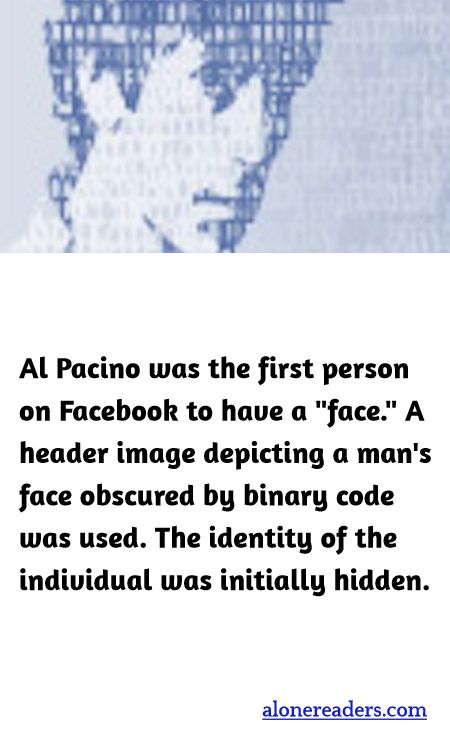
When Facebook was first launched in 2004, the profile picture concept was still a novel idea in social media. Interestingly, the face that initially welcomed users to the burgeoning platform belonged to none other than Al Pacino. The choice of Pacino's image was not due to any formal endorsement by the actor, but rather a creative decision made by Andrew McCollum, one of Facebook’s co-founders who was responsible for the site’s early graphic design.
The initial design featured a mysterious and somewhat pixelated face, overlaid with binary code—an aesthetic choice that gave the site a cutting-edge, digital age feel. This image was not prominently highlighted as being Pacino, and many early users may not have recognized him. The image of Pacino was thought to have been chosen somewhat whimsically, symbolizing perhaps a persona of intrigue and connectivity in the novel terrain of online social networking.
As Facebook evolved, the use of Pacino’s image was phased out, transitioned into what is now known as the profile picture or avatar, giving users the ability to upload their own photos to represent themselves. This move towards personalization was a key step in making social media a truly user-centered experience. It underscored the shift from a static digital directory of sorts to a dynamic, user-engaged community.
Today, the idea of a universally shared digital identity as represented by Pacino’s image seems quaint. Pictures on social media are now deeply personal, tied to the identities and lives of individuals across the globe. This evolution from a single shared image to millions of personalized snapshots tells the story of social media's rapid growth and its increasingly personalized nature, reshaping how we connect, share, and perceive each other in the digital age.
