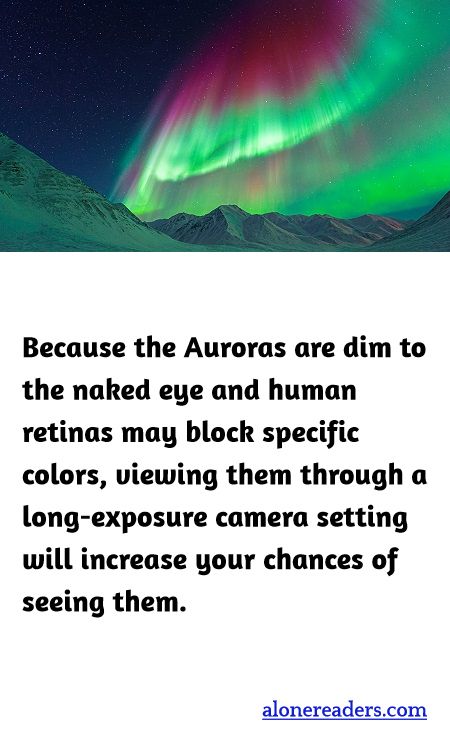
Catching a glimpse of the auroras, commonly known as the Northern or Southern Lights, is a bucket-list experience for many. These stunning displays of natural light in the Earth's polar regions are a result of collisions between Earth's atmosphere and charged particles from the sun. However, seeing them in all their glory can sometimes be challenging due to their faint appearance to the naked eye.
Human vision isn't particularly well-suited to night viewing or detecting the range of colors the auroras can manifest. The human retina, which contains color-detecting cells called cones and low-light receptors called rods, is less sensitive to some of the colors that auroras frequently display, such as deep reds or greens. This difference in perception can make the lights seem dimmer or less colorful than they actually are. Additionally, because auroras can often appear faint, the lack of light can make it hard for the human eye to register their full visual spectrum.
This is where photography, particularly long-exposure photography, becomes a valuable tool for aurora viewing. Long-exposure settings on a camera allow more light to enter the lens over an extended period, which can capture images of the aurora that are much richer and more detailed than what one can see with the naked eye. This technique involves setting the camera to keep its shutter open for a longer duration, thereby absorbing more of the scene’s available light and capturing a wider array of colors.
Moreover, cameras can be adjusted to enhance specific wavelengths of light that are less perceptible to human eyes, bringing out the luminous swirls of the aurora with greater intensity and variety. This can transform a seemingly dim overhead swirl into a vibrant spectacle of color and movement, revealing wisps and waves of light that are otherwise invisible.
Therefore, when planning to view the auroras, bringing a good quality camera equipped with manual settings can significantly enhance the experience. Learning how to manipulate shutter speed, aperture, and ISO settings can maximize your chances of capturing the elusive beauty of the auroras. Using a tripod to stabilize the camera during long exposures is also essential to avoid blurring.
Setting out to witness the auroras is indeed thrilling, and being able to capture and bring back stunning visual evidence of the lights makes the adventure even more rewarding. So if you’re hoping to see and possibly photograph these natural phenomena, consider timing your visit during peak season, generally from late September to March, and pay attention to solar activity forecasts. With a bit of luck and the right equipment, you’ll be able to capture this stellar light show in all its majesty.
