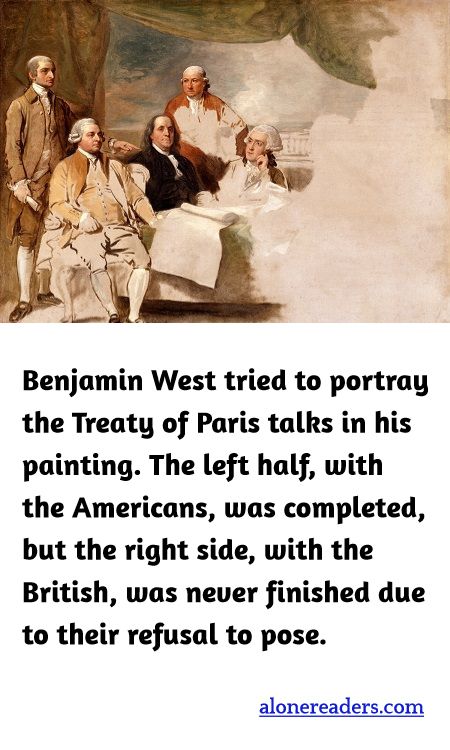
The story of Benjamin West's unfinished painting, "The Treaty of Paris," encapsulates a unique moment in art and history. The Treaty of Paris, signed in 1783, ended the American Revolutionary War, marking the recognition of American independence by the British. The treaty itself was a momentous event, uniting nations and shaping future geopolitical landscapes. West, an American artist who spent a significant part of his career in London, seized upon this pivotal moment to create a commemorative painting.
In this ambitious project, West depicted the American delegates - which included notable figures such as John Jay, John Adams, and Benjamin Franklin - with meticulous detail, symbolizing the earnest and triumphant spirit of a new nation. The American delegates are positioned and portrayed actively engaged in discussion, their expressions reflective of the gravity and the relief of accomplishing peace. Each figure is rendered with the dignity befitting a founder of an emerging state, highlighting their individual roles in the historical event.
However, the canvas tells another story on its other half, which remains starkly vacant. The British delegates, who played equally crucial roles in the negotiations, are conspicuously absent from the tableau. Their refusal to pose stemmed from a mix of political defiance and personal humilities, a reflection of the contentious and sensitive nature of the defeat and the subsequent negotiations. The British, still reeling from the loss of the American colonies, were reluctant to partake in commemorating the treaty artistically, a sentiment perhaps sharpened by the fact that West, though an American, was a favored historical painter in British courts.
This incomplete portrayal starkly visualizes the lingering animosities and the deep divide between the two factions, even as they reached a peace agreement. West's unfinished work, therefore, becomes a narrative not just of a historical meeting but also of the complex human emotions and national pride intertwined with international diplomacy. Ironically, the incomplete painting captures the essence of the Treaty of Paris better than a complete one might have. It symbolizes the transitional and unresolved feelings of an era, where the joy of American independence and the bitterness of British defeat coexisted.
This painting, inchoate yet profound, remains a poignant reminder of the delicate art of nation-building and reconciliation. It stands as a testament to the complexities of human and political relationships, highlighting how history is often not just about the events that change the world, but also about the nuanced and unfinished business between nations and people.
