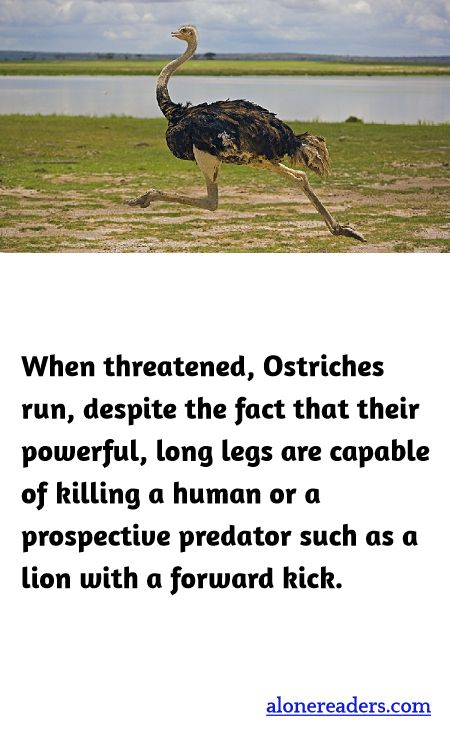
Ostriches, the world's largest and heaviest birds, are quite distinctive not only in appearance but also in their methods of self-defense. When confronted with danger, these flightless birds prefer to flee, utilizing their remarkable speed rather than engaging directly with threats. Ostriches can sprint at speeds up to 70 kilometers per hour (43 miles per hour), making them one of the fastest land speeds recorded for any bird. This incredible speed combined with their endurance allows ostriches to outrun most of their predators in the wild.
However, running is not their only defense mechanism. Ostriches possess powerful, long legs and each foot is equipped with a long, sharp claw. In situations where running is not an option, an ostrich can deliver powerful kicks, capable of causing serious harm or even death to a potential predator, including humans. These legs can execute a formidable forward kick, which is particularly dangerous due to the force and speed with which it is delivered.
The decision to run or kick depends largely on the nature of the threat and the immediate environment. Ostriches are more inclined to run when they have ample space to reach their top speed and maneuver away from danger. Conversely, if cornered or protecting their young, they may resort to using their legs for defense. This dual strategy of fleeing or fighting makes the ostrich remarkably adept at handling threats in its native habitats of African savannas and woodlands.
In their natural habitat, ostriches face predators like lions, cheetahs, and hyenas. The evolution of such a powerful kick as a secondary form of defense illustrates the harsh survival conditions these birds endure. It's a manifestation of the "flight or fight" response, optimized for an animal that, due to its size and inability to fly, must rely on other forms of mobility and physical confrontation.
Interestingly, the social structure of ostrich groups also plays a role in their defense strategies. Ostriches often graze in groups, and there is safety in numbers as they can look out for each other. The sentinels of the group are keenly aware of their surroundings, ready to alert others to run or prepare to defend themselves with their powerful legs. Thus, the cooperative dynamics of ostrich groups further enhance their ability to survive in the wild.
In conclusion, the ostrich's preference for running over fighting underscores a survival tactic that prioritizes escape over confrontation, though their ability to deliver deadly kicks serves as a strong deterrent against potential attackers. Their unique blend of speed and strength is a perfect adaptation to the challenges posed by their environment, balancing the scales between evasion and defense.
