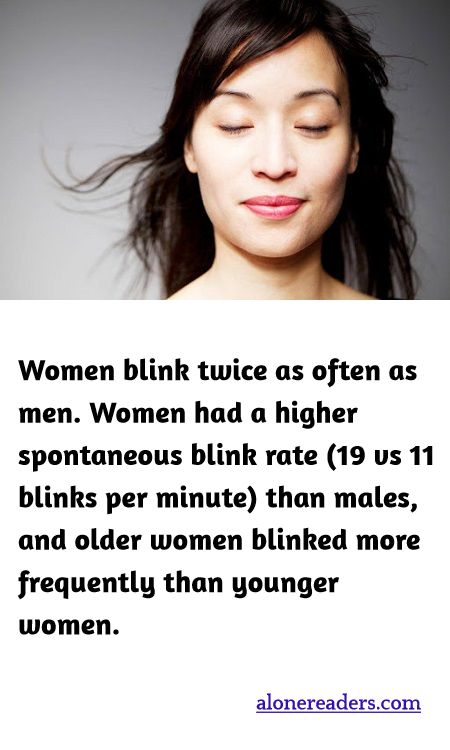
The phenomenon of blinking, a simple yet essential human function, exhibits some fascinating differences between genders. Studies have shown that on average, women tend to blink nearly twice as often as men. This discovery has intrigued scientists and researchers, leading to further investigations into the reasons behind such a disparity.
Blinking is primarily a protective mechanism that keeps the eyes clean and moist by spreading tears over the surface, and it also helps in shielding the eyes from irritants. However, the spontaneous blink rate (SBR) — blinks made without external stimuli — varies notably between individuals. Research indicates an average SBR of about 19 blinks per minute for women, compared to about 11 for men.
These differences might be attributed to physiological factors. One theory suggests that hormonal variations, particularly the levels of estrogen and progesterone, could influence how often someone blinks. Estrogen, found in higher levels in women, might increase the blink rate by making the ocular surface more sensitive and thus more prone to triggering the blink reflex.
Age also plays a role in how frequently a person blinks. Studies have found older women tend to have a higher blink rate compared to younger women. This increase could be due to changes in eye physiology over time, such as a decrease in tear production or changes in eyelid function, both of which could prompt more frequent blinking to compensate for increased eye discomfort or dryness.
Understanding these differences in blink rate not only sheds light on the subtle ways our bodies vary between genders but also has practical implications. For example, the higher blink rate in women could be a factor to consider in activities and professions that require visual precision, sustained attention, and eye-hand coordination. Additionally, knowing that blink rate changes with age could influence approaches in eye care, particularly for older women who may suffer more from dry eye syndrome.
These insights highlight the complex interactions between biological, environmental, and perhaps even social factors in determining the simple action of blinking. Further research will continue to unravel these intricacies, offering deeper understanding and better personalized treatments in ocular health.
