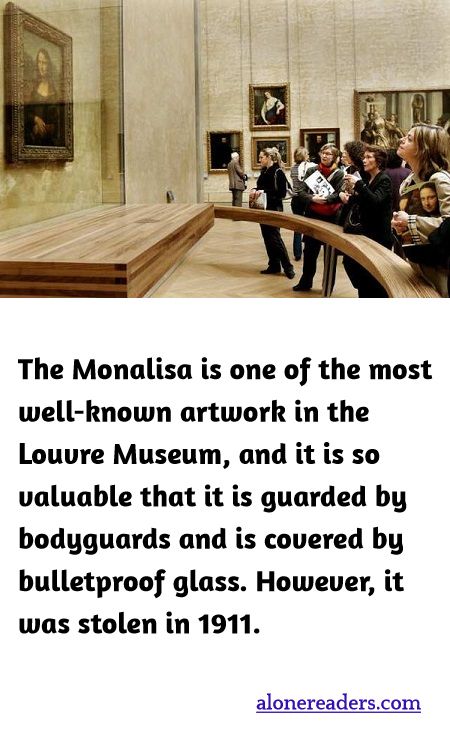
The Mona Lisa, painted by Leonardo da Vinci in the early 16th century, has become one of the most famous and recognized paintings in the world, currently housed in the Louvre Museum in Paris. Esteemed for its exquisite portrayal of Lisa Gherardini, the artwork exemplifies da Vinci's mastery in the technique of sfumato and his skill in capturing the human spirit. The painting's allure is magnified not just by its artistry but also by its tumultuous history, including its theft in 1911.
This notorious heist was executed by Vincenzo Peruggia, an Italian handyman who had been employed at the Louvre. His motive was reportedly patriotic: he believed the painting should be returned to Italy for display in an Italian museum. Peruggia disguised himself as a Louvre worker, hid inside the museum overnight, and simply walked out with the Mona Lisa hidden under his clothing the next morning. The theft went unnoticed for over 24 hours, until museum staff realized that the painting was missing from its usual spot.
The disappearance of the Mona Lisa created a media frenzy and public outcry. The Louvre was closed for a week during the initial investigation. French poet Guillaume Apollinaire and artist Pablo Picasso were even briefly suspected of involvement in the theft. Meanwhile, Peruggia kept the painting in his Paris apartment for two years.
The artwork was eventually recovered in 1913 after Peruggia attempted to sell it to the directors of the Uffizi Gallery in Florence. He was arrested, tried, and served a short jail sentence, after which he returned to France. The painting was displayed in Italy before being returned to the Louvre in 1914.
Today, the Mona Lisa is viewed by millions of visitors each year from behind bulletproof glass, a testament to both its immense value and its vulnerability. This level of security, including bodyguards, is a direct response not only to the 1911 theft but also to other incidents, including an attack in 1956 when acid was thrown at the painting and a rock was later thrown at it, causing minor damage.
The Mona Lisa continues to captivate global audiences, not only because of its artistic excellence but also because of its dramatic history, which adds layers to its mystique and allure. Through its thefts, attacks, and subsequent secure presentation, the painting symbolizes both the vulnerabilities and the enduring appeal of valuable cultural artifacts.
