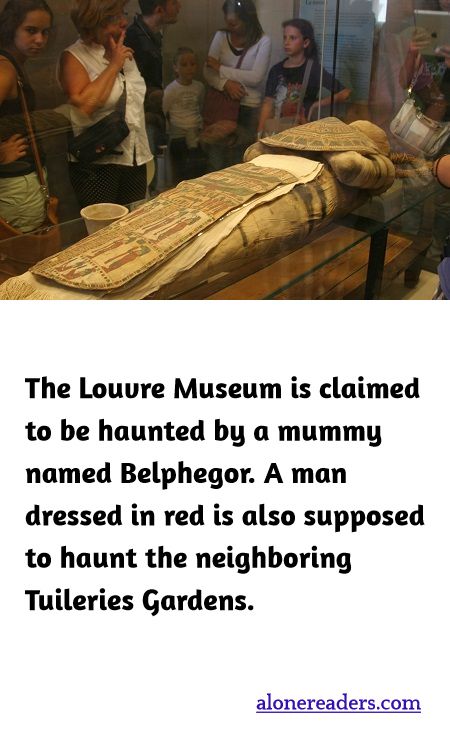
The lush history of Paris is not without its fair share of eerie tales and ghosts that allegedly haunt its iconic landmarks. Among these, the Louvre Museum stands out not only as a treasure trove of art but also as a sanctuary of spectral legends. One such haunting figure that is rumored to roam the corridors of this historic monument is a mummy referred to as Belphegor.
Belphegor’s enigma originates from an ancient mummified body displayed within the museum. Visitors and museum workers have reported unusual disturbances and ghost sightings in areas surrounding this exhibit. The legend further deepens with claims that the spirit of this mummy wanders the museum at night, perhaps as a lonely guardian of its own relics or in unrest due to the displacement from its original resting place.
Adding to the spectral ambiance not far from the Louvre, the Tuileries Gardens resonate with their ghostly narrative. This iconic green space, nestled between the Louvre Museum and Place de la Concorde, is said to be haunted by an apparition known commonly as the “Red Man” of the Tuileries. Dressed in a striking red attire, this ghost is allegedly the spirit of a man murdered in the gardens in the 16th century. Legends say he was a palace moat or an advisor, sometimes linked to figures close to the royalty residing at the Tuileries Palace before it was destroyed in 1871.
These apparitions have found a place in the modern tales of Paris, bewitching residents and visitors alike. The stories of Belphegor and the Red Man impart an additional layer of mystique to these renowned Parisian sites. Whether approached with skepticism or belief, these ghostly legends enrich the cultural tapestry of the city and add a thrilling edge to visits to these otherwise historical sites. While they likely enhance the tourism appeal, they also serve as reminders of the deep, often dark history that shapes one of the world's most beloved cities. Whether these spirits are figments of collective imagination or bearers of unresolved historical remnants, they undeniably foster a unique dialogue between Paris’s past and present.
