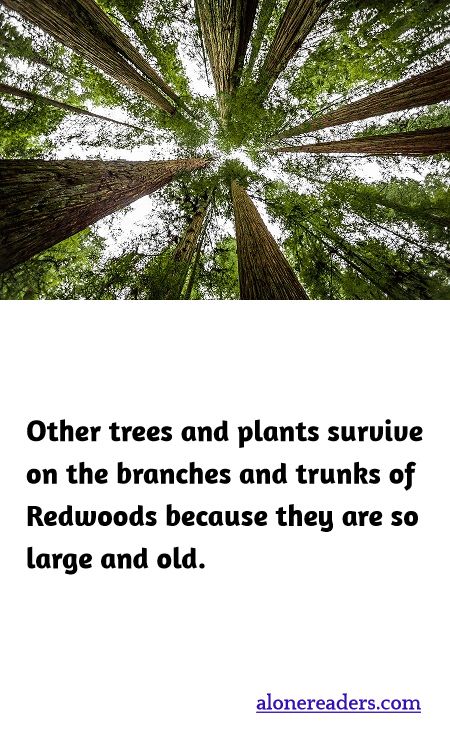
The majestic redwood forests, primarily found along the Pacific coast of northern California and extending into Oregon, are not only renowned for their awe-inspiring height and ancientness but also for their role as hosts to a diverse array of other plants and trees. These towering giants, some of which reach heights of over 350 feet and ages of more than 2,000 years, create unique ecosystems in their canopies and on their trunks.
The phenomenon of other plants growing on the surface of redwoods is known as epiphytism. Epiphytes are plants that grow on other plants but do not derive nutrients from their hosts, unlike parasites. Instead, they obtain moisture and nutrients from the air, rain, and debris accumulating around them. In the lush, foggy climates where redwoods thrive, these conditions are ideal for a variety of epiphytic plants.
Mosses, lichens, and ferns commonly blanket the trunks and branches of redwood trees, thriving in the moist, stable environment provided by the thick bark. Ferns, in particular, are frequently seen adorning redwoods; species like the delicate licorice fern often root in the rich organic matter that collects in crevices along the tree’s massive branches. These epiphytic plants not only survive but flourish, contributing to a vertical stratification of the forest ecosystem.
In addition to mosses and ferns, larger plants and even other trees can be found growing out of redwoods. Huckleberry bushes and various shrubs may sprout directly from the soil that has gathered in the crannies of a redwood’s limbs or trunk. In more extraordinary cases, entire trees such as Sitka spruce and Western hemlock are known to germinate and mature while perched high above the ground on a redwood host. This layering of canopy provides unique niches for countless wildlife species and creates an incredibly biodiverse habitat.
This vertical layering also facilitates a fascinating ecological phenomenon called nutrient cycling, which is crucial to the health and longevity of these forested ecosystems. As plant matter from these epiphytes falls to the forest floor and decomposes, it enriches the soil, promoting the health of the redwoods themselves and the undergrowth beneath them.
The symbiosis seen in redwood forests underscores the interconnectedness of woodland ecosystems. It highlights not only the dependency of individual species on one another but also their collective resilience and adaptability. By hosting a range of other plant species, redwood trees enhance the biodiversity of their environment, ensuring robust ecosystems that are more resilient to changes and disturbances.
This rich interdependence reminds us of the importance of preserving these ancient forests, not only for the awe-inspiring redwoods but also for the myriad of organisms that rely on them. The conservation of redwood forests is crucial, ensuring that this spectacular example of ecological complexity and biodiversity is maintained for future generations to study, learn from, and enjoy.
