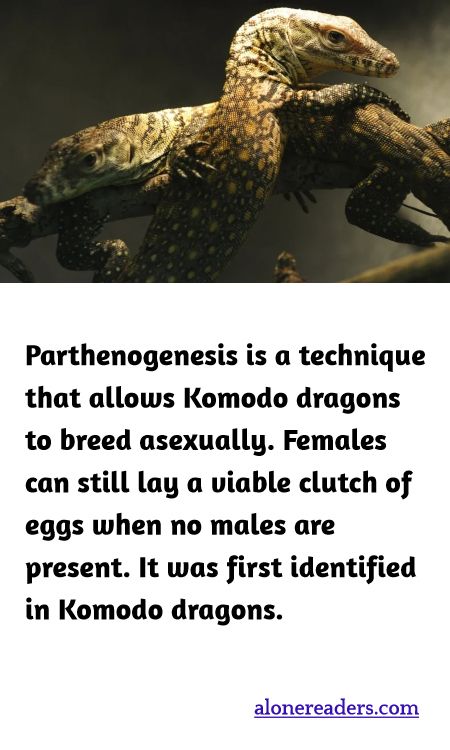
Parthenogenesis is a fascinating reproductive strategy observed in a variety of animal species, including the formidable Komodo dragons. This form of asexual reproduction allows females to produce offspring without the genetic contribution of a male. In particular, Komodo dragons, the largest living species of lizard, were first discovered to have this capability, shedding light on the diverse ways life can propagate in differing environmental circumstances.
When a female Komodo dragon engages in parthenogenesis, she lays eggs that are entirely derived from her own genetic material. These eggs develop and hatch without any fertilization by a male. Interestingly, the process typically results in offspring that are genetic clones of the mother, although they are not completely identical due to natural genetic mutations that can occur during the process.
The discovery of parthenogenesis in Komodo dragons was a significant breakthrough in understanding the reproductive biology of these creatures. Previously, it was assumed that the presence of a male was necessary for reproduction. The revelation that females can reproduce alone was particularly surprising given that Komodo dragons are known for their aggressive and solitary nature, which makes encounters between males and females less frequent outside of mating periods.
This reproductive strategy is thought to be an evolutionary adaptation to the isolated environments Komodo dragons often inhabit, such as secluded islands in Indonesia. In situations where male dragons are sparse or absent, parthenogenesis ensures that the species can still propagate, providing a vital mechanism for maintaining population stability. However, it is essential to note that parthenogenetic reproduction can increase genetic uniformity, which might reduce the population’s ability to adapt to changing environmental conditions or resist diseases.
Overall, the capability of Komodo dragons to reproduce through parthenogenesis not only highlights their unique biological adaptations but also underscores the complexity and versatility of nature’s reproductive strategies. This discovery opens up new avenues for research into genetic diversity and adaptation in isolated populations, providing broader insights into evolutionary biology.
