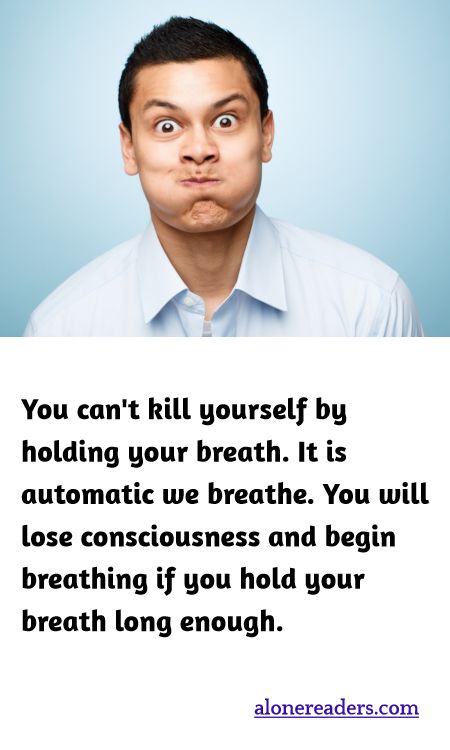
Breathing is an automatic and essential life function, controlled by the autonomous nervous system. This system regulates critical bodily functions without requiring conscious thought, ensuring that the body continues to operate effectively even when we are not actively thinking about it. One crucial aspect of this system is the respiratory process, which cannot be voluntarily overridden to the point of self-inflicted harm by simply holding one’s breath.
When someone attempts to hold their breath, the body initially reacts by using the oxygen available in the bloodstream. As oxygen levels decrease, carbon dioxide levels build up in the blood. This increase in carbon dioxide—rather than the absence of oxygen—triggers the body’s urge to breathe. The brain monitors these levels through chemoreceptors, which are sensitive to changes in the blood's pH caused by varying carbon dioxide levels. When these chemoreceptors detect high levels of carbon dioxide, they stimulate the respiratory center in the brain to resume breathing to stave off potential harm.
If someone holds their breath long enough, the body’s fail-safe mechanisms come into play. The increasing discomfort from the high carbon dioxide levels eventually becomes unbearable, and in an attempt to prolong breath-holding, an individual might pass out. This loss of consciousness is the body’s way of protecting itself, triggering the autonomous nervous system to regain control and restart breathing automatically. Consequently, it is essentially impossible to voluntarily stop breathing entirely through breath-holding alone.
This safety mechanism illustrates the robust nature of the human body's drive to survive. It highlights not only the complexity of the respiratory system but also the integrated safeguards that protect against potential self-harm from our own voluntary actions. The evolutionary development of such automatic controls ensures that vital functions like breathing persist even in scenarios where conscious control is compromised or relinquished.
