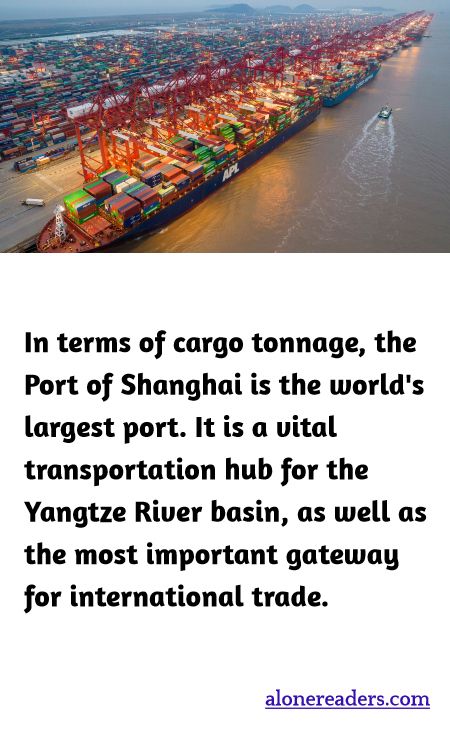
The Port of Shanghai, holding the title of the world's largest port in terms of cargo tonnage, is a cornerstone of global trade and a pivotal maritime gateway for not only China but also the international market. Situated at a strategic juncture where the Yangtze River meets the East China Sea, the Port of Shanghai serves as the primary maritime gateway for the sprawling Yangtze River basin, which is one of the most significant economic zones in China. This basin extends thousands of kilometers inland and is a vibrant industrial and agricultural heartland that contributes substantially to the country's GDP.
The importance of the Port of Shanghai in international trade cannot be overstated. It acts as a critical transshipment hub, where goods from countries around the world are imported, exported, or re-routed. Thanks to its advanced infrastructure and strategic location, it effectively connects China with every major market across the globe, enabling the efficient flow of goods ranging from raw materials to finished products. Moreover, the port's capacity has been continually expanded and modernized to handle the increasing demands of global trade. It features state-of-the-art facilities for handling a vast array of cargo types including containers, bulk commodities, and breakbulk.
The operations at the Port of Shanghai are a testament to the marvels of modern logistics and engineering. It is equipped with deep-water docks, extensive warehousing spaces, and an impressive network of cranes and other cargo-handling machinery. This setup ensures that even the largest cargo ships can be accommodated and managed efficiently. Additionally, the port's integration with major industrial and free-trade zones promotes seamless logistics and swift transit of goods, minimizing downtime and enhancing trade flows.
The impact of the Port of Shanghai extends beyond economics; it is also a vital employment generator in the region. Thousands of jobs are directly or indirectly linked to the operations of the port, supporting families and bolstering the local economy. Moreover, the port's influence on global shipping trends and logistics practices has positioned it as an influential player in international trade discussions and policy formulations.
In conclusion, the Port of Shanghai is not just a crucial node in China’s economic infrastructure but also a linchpin in the apparatus of global trade. Its role in facilitating effective international commerce and its capacity to adapt to the dynamic demands of global markets underscore its status as the world's largest port by cargo tonnage. As global trade patterns continue to evolve, the Port of Shanghai is likely to remain at the forefront of the shipping industry, continually expanding its capabilities and setting benchmarks in maritime logistics.
