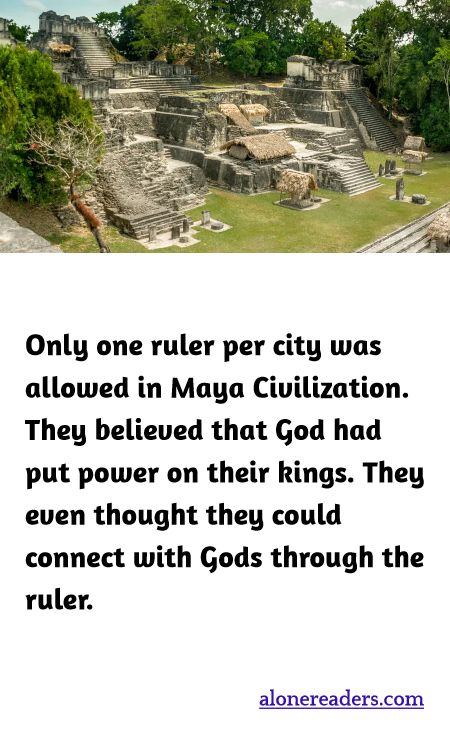
In Maya civilization, which thrived from around 2000 BCE to the 16th century CE, political and spiritual governance was deeply intertwined, with each city-state ruled by a single dominant leader. These rulers were not merely political figures but were also considered divine intermediaries, positioned by the gods to serve both heavenly and earthly realms.
The Maya believed that their kings were chosen by the gods and endowed with divine rights to rule. This divine connection was not just theoretical; it played a crucial role in the daily religious and social lives of the Maya people. Kings often took on the role of a "mediator" between the gods and the people, responsible for carrying out rituals, sacrifices, and ceremonies that were believed necessary for maintaining cosmic order, ensuring fertility, and bringing rain for crops.
This connection to the divine also extended into the realm of architecture and urban planning. Many Maya cities feature large palaces and temples, prominently situated to reflect the king’s central, exalted position. These structures were often used for both administrative and ceremonial purposes, underscoring the ruler's dual role. The positioning of these buildings, along with detailed inscriptions that often adorned their walls, tell stories of the rulers' divine lineage, great deeds, and their crucial mediating role between their people and the gods.
The concept of direct divine endorsement gave the Maya rulers not only political authority but also a significant level of control over their subjects in matters religious and civil. It instilled a sense of order and stability, albeit underscored by a cosmic significance that, if disobeyed, could result in displeasure from the gods that could manifest in societal or natural upheavals.
Such a system of governance, where a single individual wielded such immense power, inevitably led to a culture deeply invested in the persona of the ruler. The kings' successes and failures were seen as a direct reflection of divine favor or anger, which further reinforced their need to abide by religious duties and rituals.
The collapse of Maya civilization began in the 8th and 9th centuries CE, with most southern cities being abandoned by the end of the 10th century. However, the system of divine kingship left a significant imprint on the archaeological and historical records, allowing for a vivid reconstruction of how these ancient people merged divinity with everyday governance, creating a unique societal structure that endured for thousands of years.
