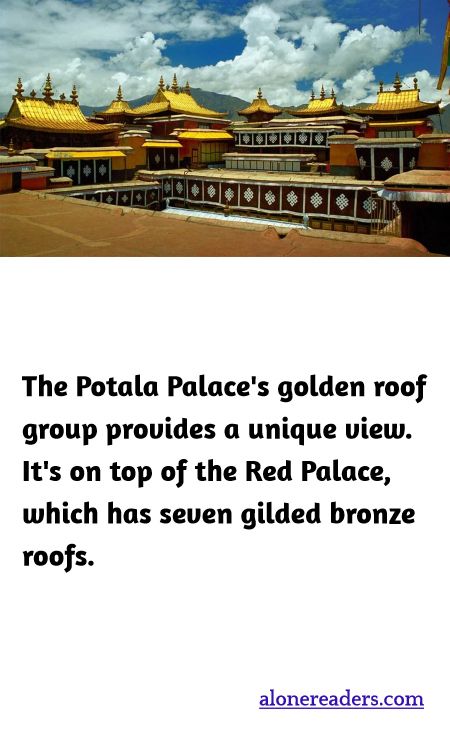
Perched atop Marpo Ri hill, 130 meters above the Lhasa valley, the Potala Palace is not only a symbol of Tibet but also a masterpiece of Tibetan architecture. Its golden roof group, situated on the Red Palace, is one of the most iconic and visually striking features of this historic edifice. Consisting of seven gilded bronze roofs, these structures shimmer brilliantly under the sunlight, creating a breathtaking spectacle that can be seen from miles around.
The Red Palace itself exudes spiritual significance and architectural magnificence. It lies at the core of the Potala Palace and was constructed after the death of the fifth Dalai Lama. It houses several chapels and mausoleums of various Dalai Lamas, sacred stupas, and numerous Buddhist scriptures. The golden roofs specifically crown the top of the Red Palace, functioning both as a decorative element and a marker of the sacred spaces beneath them. Each roof is uniquely designed and decorated with intricate patterns and religious motifs, showcasing the skilled craftsmanship of Tibetan artisans.
Aside from their aesthetic appeal, the golden roofs also hold profound religious importance. They are designed to represent the heavens and are seen as a direct link between the spiritual realm and the secular world. The gold used in the roofs is not only a symbol of purity but also an act of devotion, reflecting the reverence the Tibetan people hold for their spiritual leaders.
The view from the golden roof group is equally magnificent, providing panoramic vistas of the surrounding city and the rugged Himalayan landscape. Visitors and pilgrims alike climb the palace's numerous steps to reach this vantage point, seeking both the spiritual enrichment and the breathtaking sights that the roof offers.
The Potala Palace, with its golden roof group, continues to be a source of inspiration and a symbol of peace and resilience. It stands not just as a testament to the architectural and spiritual accomplishments of Tibetan culture, but also as a beacon of hope and strength for the Tibetan people. Even today, it attracts thousands of visitors from all around the world, drawn by its historical legacy and its spiritual significance.
