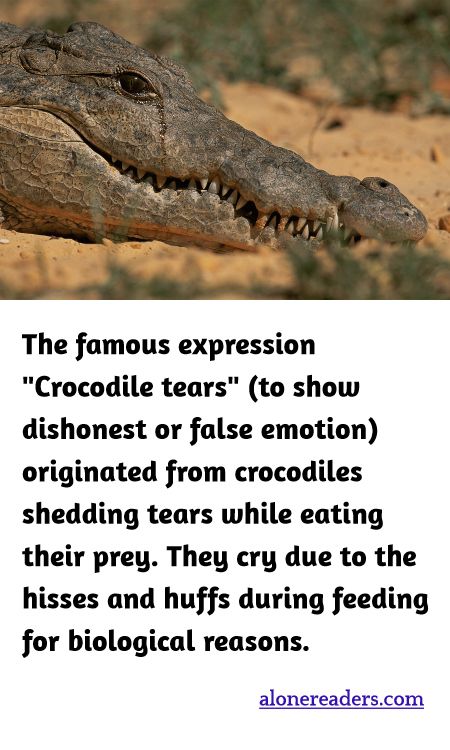
The expression "crocodile tears" paints a vivid picture of insincere emotions and is etched deep into our vernacular. Rooted in ancient observations, this idiom alludes to the curious phenomenon of crocodiles seemingly weeping while devouring their prey. It’s an evocative metaphor for feigning sadness or remorse that one does not genuinely feel. But is there any truth to the tears of these fearsome reptiles, or is it all just a part of myth and misunderstanding?
The concept dates back to the 14th century and can be found in various literary works, where crocodiles are described as shedding tears while eating their prey. Later, in the 16th century, the expression was elaborated in the works of Sir John Mandeville and Shakespeare, linking these tears to deceitful behavior among humans. The belief was that crocodiles wept to lure or express sorrow over their victims, a notion that added a darkly poetic touch to their already fearsome reputation.
Scientifically, the phenomenon has intrigued researchers and wildlife observers for centuries. Today, it's understood that while crocodiles do have tear glands, their "crying" isn't related to emotions. The tears are most likely a result of physiological reactions during feeding. Crocodiles hiss and huff while consuming their food; these vigorous activities may stimulate the tear glands due to the air pressure changes in their sinuses, causing the glands to secrete tears. Additionally, moisture in the eyes is necessary for these reptiles as they often spend extended periods in salty or dirty water environments, requiring internal lubrication to cleanse their eyes.
Exploring the roots and scientific explanations of "crocodile tears" not only enriches our understanding of the expression but also delves deeper into the intricate behaviors of these ancient creatures. This idiom serves as a reminder of how human perspectives can shape our interpretation of natural phenomena, weaving stories and myths around observable facts that bridge the gap between nature and human culture. As language evolves, so does our understanding of the world around us, bringing us closer to the reality of why crocodiles might seem to weep while savoring their feast.
