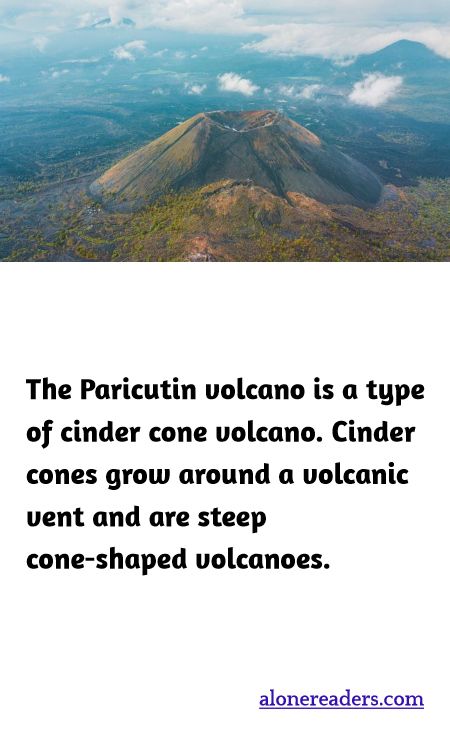
The Paricutin volcano, located in western Mexico, serves as a quintessential example of a cinder cone volcano, one of the simplest forms of a volcanic structure. Cinder cone volcanoes, such as Paricutin, are characterized by their steep, conical shape that thrives around a singular central vent. Cinder cones are built from particles and blobs of congealed lava ejected from a single vent. As these particles of lava fall back to Earth, they cool and solidify, forming a circular or oval cone with steep sides.
The emergence of Paricutin in 1943 provides a rare and insightful look into the birth and lifecycle of a cinder cone volcano. Its sudden appearance in a farmer's cornfield was unforeseen, marking a pivotal event in volcanic science. The eruption began on February 20, 1943, and continued until 1952, allowing scientists to document its entire lifecycle from inception to dormancy. This event marked the first time the formation of a cinder cone volcano was observed and studied scientifically from start to finish.
Throughout its active years, Paricutin spewed ash and lava, significantly altering the local landscape. The volatile activity created layers of tephra and eventually built up the cone to a height of about 424 meters. The areas surrounding Paricutin were enveloped in lava flows and ash, which reshaped local topography and displaced entire communities. Despite the devastation, the event was invaluable academically. It provided extensive insights into vulcanology, particularly in understanding the processes involved in the eruption and growth of cinder cone volcanoes.
The Paricutin volcano remains an object of scientific interest even decades after its last eruption. It stands as a natural monument to the dynamic processes of Earth's geology, encapsulating the potent forces beneath the planet's crust that continue to shape the surface. While it is no longer active, the legacy of Paricutin continues to influence the field of geology, offering lessons on the power of nature and the transient yet impactful life of a cinder cone volcano.
