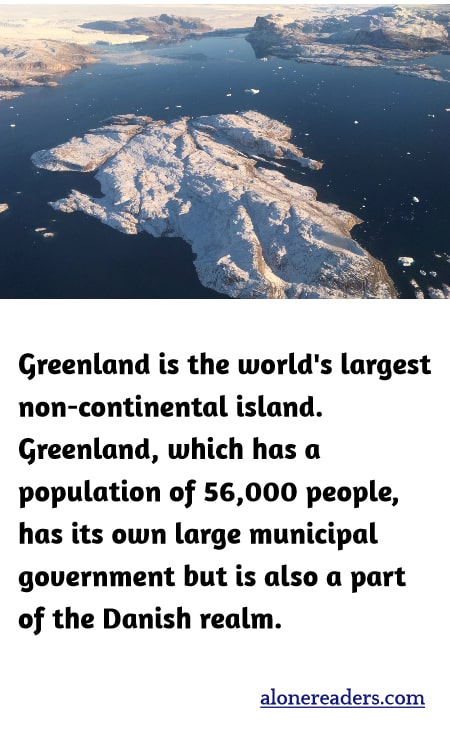
Greenland, often recognized as the world's largest non-continental island, stretches over approximately 2.16 million square kilometers. Despite its vast land area, it is sparsely populated with around 56,000 inhabitants. This makes it one of the least densely populated regions on the globe. The majority of its residents are Inuit, descended from the Thule people who migrated from Alaska in the 13th century, blending the rich tapestry of culture and history that characterizes the island.
This massive island is known for its expansive ice sheets, which cover most of its surface area. In fact, these ice sheets are second only to Antarctica's in size. Due to the extreme climate, the majority of Greenland's population lives along the ice-free, fjord-laden coast, particularly on the southwest coast, which enjoys a slightly milder climate than the rest of the island.
Politically, Greenland is unique. It has its own extensive municipal government known as the Government of Greenland, which handles a wide array of domestic matters including but not limited to education, health, and local governance. However, Greenland is not completely autonomous; it remains part of the Danish realm under the Danish Monarchy. In 1979, Greenland was granted home rule by the Danish government, a status that was further expanded in 2009, granting Greenland self-government over judicial affairs, policing, and natural resources. Nonetheless, defense and foreign affairs are still controlled by Copenhagen.
Despite its affiliation with Denmark, Greenlandic is the predominant language, reflecting its cultural ties more closely with indigenous Arctic peoples than with continental Europe. This autonomy and the blend of local and Danish governance have raised questions about the future of Greenland's political status, especially in light of global climate change influencing its strategic and economic significance.
Climate change poses a profound impact on Greenland. Its vast ice sheets are melting at an accelerated rate, contributing to global sea level rise. This melting also potentially unlocks previously inaccessible natural resources, drawing the attention of various global powers interested in these new economic opportunities. Furthermore, the receding ice could open new shipping routes, significantly altering global shipping paths and geopolitics.
Thus, Greenland stands at a crossroad, balancing its environmental challenges with economic and political opportunities. How it navigates these waters will be crucial for its people and could resonate globally, offering insights into the impacts of climate change and sovereignty issues faced by non-continental regions.
