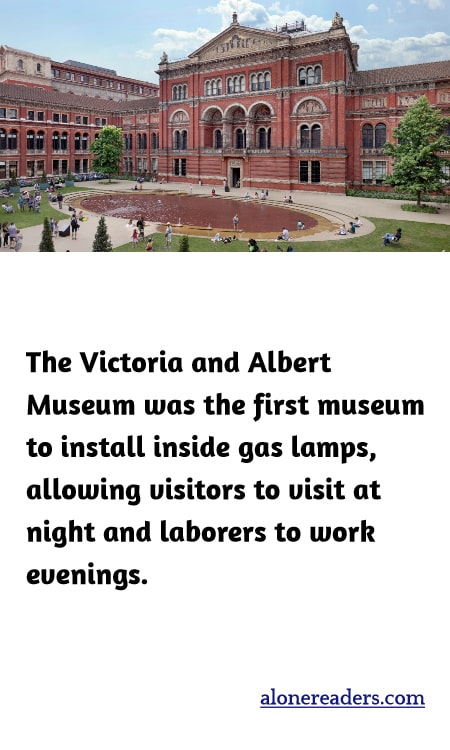
The Victoria and Albert Museum, located in London, is renowned not only for its vast collection spanning centuries of art and design, but also for its role in pioneering museum accessibility and operations. One notable innovation was its installation of gas lamps inside the building, making it the first museum to adopt such technology. This decision, made in the 19th century, marked a significant shift in how museums served the public and their staff.
The introduction of gas lamps enabled the museum to extend its opening hours into the evening. This was a revolutionary development at the time, as it allowed people who worked during the day the opportunity to visit during the evening hours. The impact was profound, making culture and education accessible to a broader segment of society, including working-class individuals who could not afford the luxury of visiting during conventional daytime hours.
Furthermore, the adoption of gas lighting also meant that the museum's staff could work later shifts, facilitating more flexibility in operations and maintenance. It allowed for a more extensive schedule of events and exhibitions, some of which could now be held in the evenings, adding to the museum's allure and public engagement.
This move by the Victoria and Albert Museum not only enhanced visitor experience but also set a precedent for other museums around the world, highlighting the importance of accessibility and inclusivity in cultural institutions. The shift towards extended opening hours influenced the practices of other museums globally, encouraging them to consider similar adaptations to meet the needs of their audiences.
The use of gas lamps, though now outdated and replaced by more modern lighting technology, was a key step in the museum's history that reflected a broader Victorian era trend towards innovation and public accessibility. This period was marked by significant advancements in technology and infrastructure, which often intersected with cultural developments, making art and culture more available to the masses than ever before. The legacy of such innovations is still evident today in the continuing efforts of museums to be accessible and engaging to all segments of society.
