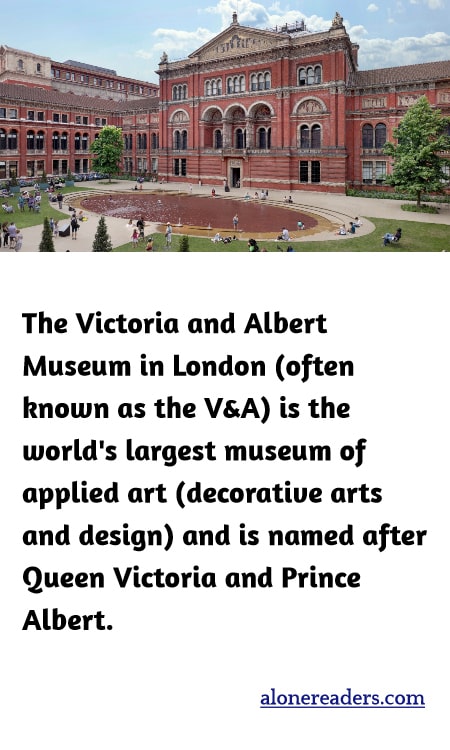
The Victoria and Albert Museum, commonly referred to as the V&A, stands as a monumental institution in the heart of London, dedicated to the curation and celebration of decorative arts and design. Named after Queen Victoria and Prince Albert, the museum continues to honor their vision for a space that promotes education, art, and culture. As the world's largest museum of applied arts, the V&A holds a diverse collection spanning 5,000 years of art, housed in an impressive building that is itself a historical and architectural treasure.
From ancient textiles and costumes to cutting-edge contemporary design, the museum's vast collection includes over 2.3 million objects that explore the rich tapestry of human creativity across continents and cultures. Highlights include the museum's British galleries, which provide a thorough narrative of British art and design from 1500 to 1900, showcasing remarkable pieces such as the Great Bed of Ware and the lavish gilded furniture of the 18th century. Additionally, the V&A's holdings of Asian art are among the finest in the world, with an extensive array of South Asian, Korean, Japanese, and Chinese art that offers insight into the varied traditions and histories of these cultures.
Moreover, the museum is renowned for its temporary exhibitions, which are meticulously curated and often explore the intersections of history, art, and society. These exhibitions not only highlight the depth and breadth of the V&A's permanent collection but also bring in contemporary works and new perspectives, keeping the museum at the forefront of the design world.
Education and public engagement are at the core of the museum's mission. The V&A offers a wide range of programs and workshops that encourage public participation and bring art education to diverse audiences. These programs, designed for various age groups and skill levels, reinforce the museum's role as an educational institution and ensure that the arts remain accessible to all.
The V&A also serves as a hub of research and scholarship, with its extensive library and archives that are invaluable resources for scholars worldwide. The museum's dedication to research enhances our understanding of decorative arts and supports the professional development of artists, designers, and historians.
In conclusion, the Victoria and Albert Museum is not just a repository of objects but a vibrant cultural institution that actively engages with its community and the wider world. It plays a crucial role in preserving artistic heritage and inspires new generations to appreciate and create art. The V&A exemplifies the dynamic interplay between tradition and innovation, making it a cornerstone of London's cultural landscape and a destination for visitors from around the globe.
