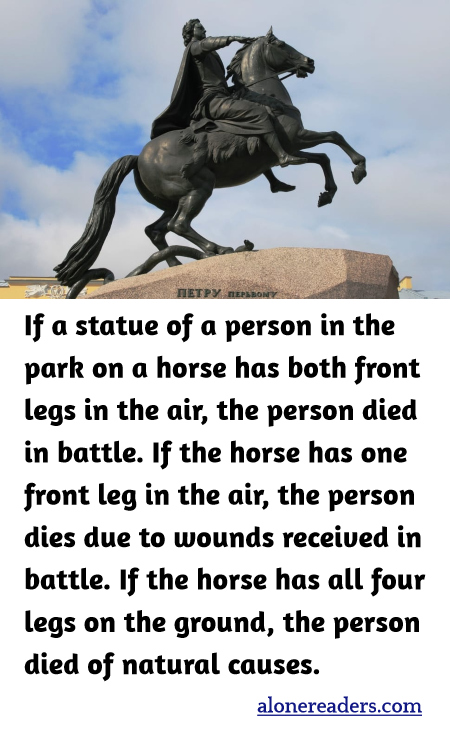
Throughout history, statues have been erected to honor notable figures, immortalizing their contributions and achievements in stone and metal. One particular tradition that has captured the public imagination involves equestrian statues, specifically the positioning of the horse's legs, which people believe symbolizes how the rider met their end.
Legend has it that if an equestrian statue shows the horse with both front legs in the air, the person depicted died in battle. This dramatic pose captures the heat of conflict and the bravery of the figure in question. A less common pose is when the horse has one front leg raised. This is widely thought to signify that the rider was wounded in battle and later died from these injuries, a subtle distinction from death during actual combat. Lastly, if the equestrian statue features the horse with all four legs on the ground, it is said that the individual died of natural causes. This position may suggest peace or a return to calm after a storied life.
While this form of symbolic representation provides a visually impactful narrative, it's important to note that this 'code' is more myth than fact. Historians argue that there is no consistent rule that was followed when designing these statues, and attributing such specific meanings to all equestrian statues can be misleading. The choice often depended more on the preferences of the sculptor or the commissioning body than on any established convention.
Nonetheless, these beliefs persist and add an intriguing layer to the appreciation of public monuments. They invite observers to ponder not just the history of the figure commemorated, but also the circumstances of their death and the way it is represented artistically. Whether myth or fact, the language of equestrian statues is a fascinating intersection of art, history, and symbolism, enriching our landscapes and our narratives.
