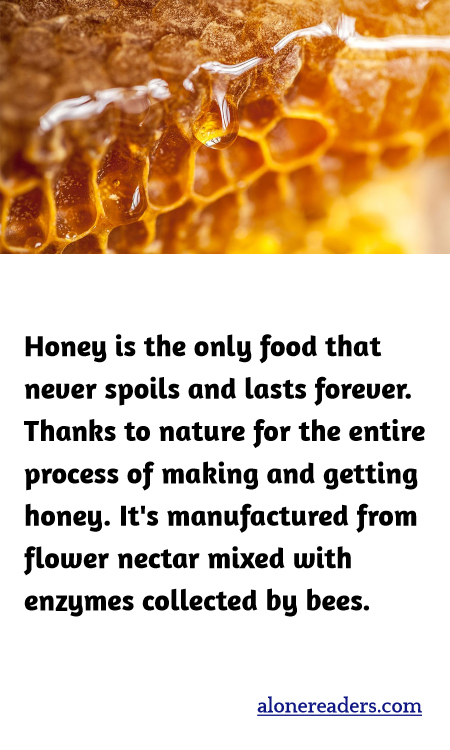
Honey, a remarkable substance known for its unique longevity, is truly a gift from nature. It’s fascinating that honey is the only food that never spoils and can last forever under the right conditions. This incredible durability owes much to the process through which honey is made, involving not just the bees but the flowers they visit and the environments they inhabit.
The journey of honey begins in the heart of flowers, where bees collect nectar—a sweet liquid composed primarily of water and sugars. What happens next is a marvelous display of nature’s efficiency: bees carry this nectar back to their hives, where it undergoes a transformation. Inside the bee’s stomach, the nectar mixes with enzymes that begin the process of breaking down the sugars into simpler forms. Once back at the hive, bees pass the nectar between themselves, further enhancing the enzymatic action and gradually evaporating its water content.
This evaporation process is critical, as it thickens the nectar into what we recognize as honey, and significantly reduces its water content, making it less hospitable for bacteria and microorganisms that typically spoil food. Bees play a role here too, fanning the honey with their wings to speed up the evaporation process.
The low water content of honey, combined with its acidity, creates a natural barrier against microorganisms. Honey also contains small amounts of hydrogen peroxide, produced by one of the enzymes mixed into the nectar. This acts as a mild antiseptic, warding off microbial invaders.
Moreover, the storage method by bees further ensures honey’s longevity. Bees cap the honey-filled cells in their hives with wax, sealing it off from the air and preventing moisture regain, which helps in preserving the honey indefinitely when kept sealed in an airtight container.
This intriguing process not only produces a food item that can stand the test of time but also underscores the intricate relationships within ecosystems and the remarkable adaptations of organisms like bees. Whether used as a sweetener, a medium for medicinal concoctions, or simply consumed for enjoyment, honey remains a testament to the wonders of the natural world and the incredible systems within it. Hence, honey isn’t just a food item; it’s a result of a complex, beautifully orchestrated series of natural events that remind us of the wonders nature holds.
