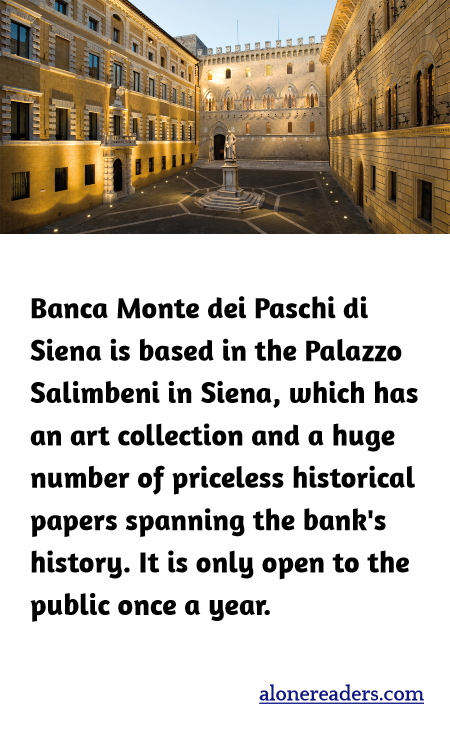
Banca Monte dei Paschi di Siena, recognized as the world's oldest surviving bank, holds a treasure trove of cultural and historical riches far beyond its financial holdings. Located in the striking Palazzo Salimbeni in Siena, Italy, the bank is not just a place for financial transactions but also a custodian of a significant art collection alongside a vast archive of historical documents that trace its long history since its establishment in 1472.
The art collection housed within the walls of the Palazzo Salimbeni includes works that span several centuries, featuring masterpieces from the Renaissance period, among others. This collection not only highlights the bank’s role in the history of Italian art but also serves as a cultural bridge connecting various epochs of European history. The collection is a testament to the bank’s historical involvement in the patronage of the arts, a common practice among prominent financial institutions during the Renaissance.
Moreover, the bank's archive contains thousands of documents, some of which are priceless, detailing the development of European banking, commerce, and finance over centuries. These documents offer invaluable insights into the economic and social history of Europe. They serve as a crucial resource for researchers and historians, offering a window into the myriad ways in which the bank has intersected with global historical events.
Interestingly, despite its rich holdings, the Palazzo Salimbeni opens its doors to the general public just once a year, making it a rare and eagerly awaited opportunity for enthusiasts of art and history. This annual opening is an event that attracts scholars, historians, and tourists alike, who are eager to uncover the layers of history enclosed within its walls. This exclusivity adds an aura of mystique around the already fascinating historical edifice, making it a focal point of cultural heritage in Siena.
The preservation and occasional public showcasing of these artefacts underscore the bank's commitment to not only safeguarding its financial assets but also preserving a cultural legacy that has played a pivotal role in shaping not just the identity of Banca Monte dei Paschi di Siena but also the broader historical and cultural landscape of Europe. Through these efforts, the bank not only reinforces its historical significance but also emphasizes the role that such institutions can play in cultural stewardship.
