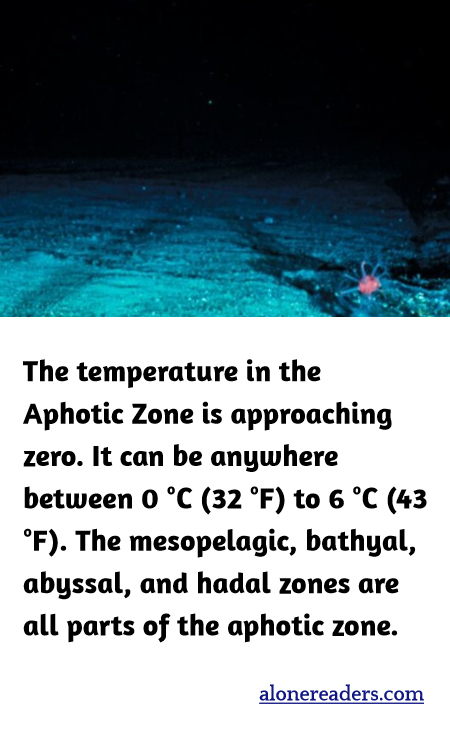
The aphotic zone, often referred to as the midnight zone, is a layer of the ocean where sunlight does not penetrate and, as a result, photosynthesis cannot occur. This absence of light shapes an environment vastly different from the more familiar sunlit layers of the ocean. The aphotic zone begins several hundred meters below the ocean surface, extending to depths that are seldom visited by humans. Because of the extreme conditions, particularly the lack of light and near freezing temperatures, the biological communities in these depths have adapted in unique and fascinating ways.
Temperatures in this deep ocean layer are chillingly cold, generally ranging from 0 °C (32 °F) to 6 °C (43 °F). Such cold conditions pose challenges not only for exploration but also for the marine life adapted to survive there. The temperature rarely reaches the freezing point due to the presence of dissolved salts in ocean water, which lower the freezing point.
The aphotic zone is divided into several subzones including the mesopelagic, bathyal, abyssal, and hadal zones, each characterized by increasing depth and pressure and decreasing temperatures. The mesopelagic zone, also known as the twilight zone, starts from where the photic zone ends and extends to about 1000 meters below the surface. This zone still receives some faint light, but not enough for photosynthesis.
Deeper still, from about 1000 meters to 4000 meters, is the bathyal zone. This zone is completely devoid of sunlight and covers the continental slopes. The abyssal zone follows, ranging from 4000 meters to 6000 meters and covering 75% of the ocean floor. This zone is particularly noted for its flat and featureless terrain. Even deeper is the hadal zone, found in oceanic trenches below 6000 meters.
Despite the harsh conditions, the aphotic zone is teeming with life that includes fish, invertebrates, and microbes uniquely adapted to extreme pressure, darkness, and cold. These deep-sea organisms often have special adaptations like bioluminescence, which is the ability to produce light, and slow metabolisms to conserve energy.
In conclusion, the aphotic zone of the ocean is a cold and dark environment that poses numerous challenges to life. However, it is also a testament to the adaptability and resilience of life, offering fascinating insights into biological adaptations and ecosystems beyond the reach of sunlight.
