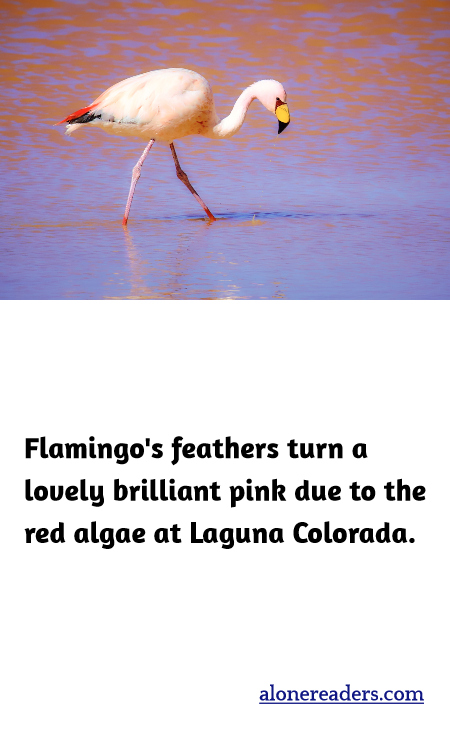
Flamingos are among the most easily recognizable and beloved birds, noted for their vibrant pink feathers which actually owe their hue to their diet. The red algae found in Bolivia's Laguna Colorada is a prime example of this fascinating dynamic. This shallow salt lake, set against the backdrop of the Andean mountains, is rich in minerals and serves as a feeding ground for the James's flamingos, one of the rarest flamingo species.
Laguna Colorada's vibrant red color comes from the algae and plankton that thrive in its mineral-rich waters. These organisms are rich in carotenoids, pigments that emit strong red and orange colors. When flamingos eat these algae, the carotenoids accumulate in their bodies, eventually influencing the color of their feathers. Interestingly, the specific shades of pink to red in flamingo feathers can vary based on their specific diet, which is why different populations of flamingos around the world exhibit slight variations in color intensity and hue.
The algae are not just a source of color, but also a crucial part of the flamingo's diet that provides them with necessary nutrients to maintain their health and vitality. Without this diet rich in carotenoids, the flamingos’ feathers would actually be white or pale grey, as they are when they are born. It's a slow transformation, observable as they mature and continuously feed on these carotenoid-rich organisms.
Environmental changes that affect the availability of these algae and plankton could therefore threaten the flamingo populations by depriving them of their primary food source and the nutritional content it contains. Thus, conservation efforts in places like Laguna Colorada are vital not only for the preservation of the habitat but also for maintaining the health and survival of these stunning birds whose life cycles are intrinsically linked to these unique ecosystems.
In conclusion, the striking pink color of the flamingos at Laguna Colorada is a beautiful example of how wildlife adapts to its environment, but it also highlights the delicate balance of nature and the importance of specific ecological conditions in the survival and health of species. The flamingos’ dependence on the red algae serves as a compelling narrative of nature’s interconnectedness and intricacy.
